


Protecting Your Radio Station from Lightning

Updated: 10 hours ago
You can visit the website directly to find a list of all their blogs or articles. If you need help with something else, feel free to ask! Operating a ham radio station in the heart of Tornado Alley presents unique challenges, especially when it comes to protecting equipment from lightning strikes. At K0UO, located in Kansas, the station manages a complex setup with 28 antenna coax feedlines connected to four major control boxes. This extensive system requires careful planning and robust lightning protection to prevent damage and ensure continuous operation.
In fact, K0UO has dedicated more time to "lightning protection" engineering, design, testing, and installation than on any other aspect of the antenna system, apart from structural considerations.

Understanding Lightning Protection Systems
The Empire State Building and the Washington Monument both get struck on a regular basis. You know what they have in common? Proper Lightning Protection. Lightning Protection System (LPS)

Lightning used to be voodoo science; now it's proven physics.

Managing Feedlines and Antenna Connections
One of the key safety practices at K0UO is that feedlines are connected to antennas only during active operation. When not in use, all feedlines and antennas are kept at ground potential. This is achieved through a network of relays and lightning discharge devices that shunt the lines to ground, minimizing the risk of voltage buildup that could cause damage.
Using over a thousand feet of feed line in parts of the system means even small differences in electrical potential between the ends can be harmful. Grounding the feedlines every 150 feet along their path to the shack helps equalize potential and reduce the chance of electrical surges. The whole system is built around single point ground technology.

All modern telecommunications sites use single point grounding as their benchmark for their Lightning Protection System (LPS). You should read more about it.
A single-point grounding system for a telecommunications site connects all grounding points to one common reference point, preventing ground loops and ensuring a controlled, low-impedance path for currents. This centralized approach equalizes potential differences across the site and reduces electromagnetic interference (EMI), enhancing signal integrity and system stability. It is particularly effective for low-frequency applications and protects against issues like lightning-induced ground potential changes by providing a unified path for surges to dissipate.
Many RF sites are home to dozens of broadcast transmitters, repeaters, microwave links, and big cell systems all atop a building, tower, or mountain top. And...through hundreds of lightning strikes, it all stays operational, and it's rare to hear of any kind of failure.

In installations utilizing coaxial feed lines, like contesting, casual QSOs, or serious DXing, safeguarding station equipment is essential. Consider the following key recommendations:
Ensure coaxial cables are grounded before they enter the equipment area. Avoid routing coaxial lines into the building at elevated heights to reduce lightning-induced currents through the equipment chassis. Even if the equipment is located on a higher floor, ground the coaxial cable first, incorporate lightning protection, and then route it to the station.
Ground the shields of coaxial cables using a short earth connection with a shield grounding block, wide copper strap, and Cadweld. This grounding should occur before the cable enters the building. Grounding at multiple locations, such as the tower base and prior to building entry, is both effective and economical.
Implement lightning arrestors for lines connected to sensitive electronics, avoiding those that only utilize a gas discharge device. These arrestors activate too late and have low power ratings. Choose blocking-type arrestors capable of handling current beyond that of a gas tube.
Establish a bulkhead grounding system near the radio equipment, ensuring a short distance to coax and all other cables entry. This system should serve as both lightning protection and an RF neutral. The length of the ground leads is important; use wide copper strap (K0UO uses 1" to 3").
Conductors. Use wide copper strap, bond it by Cadwelding, for carrying high current and long-term conductivity.
Utilize Anti-Oxidants. Anti-oxidants perform two essential functions. Firstly, they create a barrier against air and moisture on metal conductors, with synthetic lubricants providing water and chemical resistance. Secondly, they maintain electrical conductivity under pressure due to the presence of copper, aluminum, lead, and/or graphite flakes. These metal particles also enhance the compound's weight and weather resistance. The application process is simple: clean the metal surfaces and prepare them with a wire wheel before applying the anti-oxidant. For copper-to-copper or copper-to-steel joints, use a copper-loaded anti-oxidant; on aluminum-to-aluminum or aluminum-to-copper, use a complex compound.

The Role of the Master Switch and AI Control
A major game changer
A master switch controls all AC power for both the K0UO station and the K0UO Remote Ham rigs. This switch is not manually operated alone; it is integrated with an AI system that monitors real-time lightning data. When lightning activity is detected nearby, the AI automatically cuts power and grounds all equipment through the four main outside remote control antenna switch boxes. Three of these boxes are located over 1000 feet from the station, demonstrating the scale and reach of the protection system.
This setup ensures that when lightning threatens, the entire station is quickly and safely disconnected from power sources, reducing the risk of damage from surges or direct strikes.
AI-controlled antenna switching and along with the lightning protection matrix, This system is part of the real-time MUF, F layer, D layer absorption, and information on Sporadic E and other Solar & Aurora conditions, the AI-controlled antenna switching matrix confidently selects the best available antenna. This selection is based on conditions, direction, and the necessary takeoff angle of attack for optimal signal strength to specific DX stations, and it can be automatically chosen.
This system confidently predicts HF conditions over intervals from 5 minutes to 24 hours. Along with the live DX spots, it grants the operator complete control over the extensive arrays at their disposal, enabling them to make decisions with ease. Managing the vast arrays is straightforward and effortless.
Self-heaing: All the systems are using AI self-healing for automatically changing from malfunctioning radios, bad rotor boxes and the arrays and station controls as needed.
Sierra Radio Systems General Purpose Input/Output (I/O) Modules are being tested on some of the Station Controller system allowing the user to turn station power on and off, control power to ancillary devices, measure voltages and equipment temperatures. Featuring a total of 18 I/O channels to control and monitor a variety of items within the shack.

Grounding and Surge Protection Details
Every feedline is grounded at regular intervals, which is critical for dissipating electrical energy safely into the earth. The station uses a single point entry for all telecommunications lines, feedlines, and AC power. This entry point includes gas discharge protection devices designed to absorb and divert high-voltage surges caused by lightning.
The grounding system follows all National Electrical Code (NEC) and R56 standards, ensuring compliance with industry best practices. This includes the use of multiple ground rods and proper bonding techniques to maintain a low-resistance path to earth.
Monitoring Lightning Strikes with Strike Counters
On the taller metal towers, K0UO uses strike counter devices made by PolyPhaser. These devices record when a tower has been directly hit by lightning. Even if no visible damage occurs, a recorded strike signals the need for a thorough inspection of grounding rods and other components.


How the Shunt Feed Counter Works
When a lightning strike hits the tower, the voltage drop across the tower’s inductive shunt (the tower structure acting as a parallel impedance path) triggers the counter. This is different from a direct ground connection — the LSC‑12 senses the transient voltage change induced in the tower’s structure, not the current directly into the ground. Using the tower as a shunt feed is a common practice in shunt‑fed dc‑grounded antennas. In such systems, the antenna’s grounded stub or shunt helps divert a portion of the strike energy to the tower and ground system, reducing the risk of arc over on the feed line.
Uses the tower, etc. as an inductive shunt; voltage drop across the shunt triggers the counter. Requires an electrical connection spaced 6' to 10' for Rohn 25, with larger spacing for larger towers. The larger the lead separation, the greater the counter's sensitivity.


Keep a Maintenance Log
In some cases, ground rods can become crystallized by soil minerals over time, reducing their effectiveness. Regular checks and maintenance are essential to keep the grounding system in top condition. K0UO sweeps all the coax, feed-lines, and antennas components twice a year. Connectors, relays, and lightning protection devices can all go bad.


Manual and Planned Disconnects for Added Safety
When the operator intends to be absent from the station for an extended duration, a final manual disconnect is executed using Alpha Delta switches. This procedure serves as the ultimate safeguard, physically separating the antennas and feedlines from the shack.


These switches have a low-loss micro-strip cavity design, positive detent switching, master antenna ground function, a front panel removable arc-plug surge protection module, and excellent HF through UHF performance. The unselected antenna ports are grounded for protection and maximum isolation.
K0UO has incorporated the automation of disconnects through a lightning monitoring application, enhancing convenience and improving response times during severe weather conditions. Just build a "shorting relay" SPDT, 12Vdc relay which is automatically pulled in whenever the HF transceiver is powered. On Icom, one of the pins on the Molex plug on the rear panel has 14V on it when the radio is turned on. That plug is what normally powers an Icom remote tuner, but can be used to turn on several accessories. The relay wiring is as follows:
NO = the coax center going to the Icom transceiver.
NC is ground.
COM is the coax center going to the outside antenna.
The Ground (The Dirt)
General grounding and understanding your ground and soil is important for static/lightning electrical safety protection. That's one reason K0UO will test his grounding systems around the towers, to know the condition of the lightning protection system; it changes after hits. Ask anyone that's been involved in telecommunications site maintenance.
Surface ground conductivity vs. the soil beneath; it is a pretty easy task to use post hole diggers to go down three feet. If you have the same soil type at three feet that you do on the surface, it is likely surface measurements will give a more accurate total picture than if you can only go down three or four inches before soil types change.

Practical Steps for Station Safety
The safety system at K0UO is straightforward in operation but sophisticated in design. When leaving the station, the operator:
Throws the main master switch to cut AC power.
Flips off the antenna switches to ground at the antennas.
Ensures all feedlines are grounded through the relay system.
Gas type lightning protection (like PolyPhasers or AlphaDelta) on every type of line coming into the station, using a single point ground system.
The arrays and antennas are shunted to ground at all times.
This routine, combined with the AI-controlled master switch and extensive grounding, provides a strong defense against lightning damage.
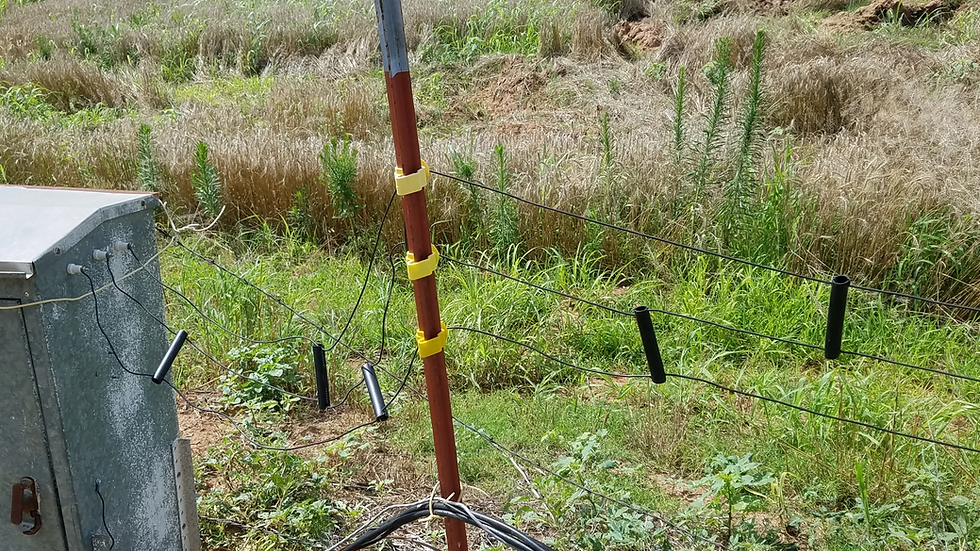
We are not referring to outdated spark gap types of LPS. Both lightning and induced current and static electricity have the potential to cause significant damage and chaos. Installing a DPDT knife switch inside your shack to redirect from the equipment to ground will not be effective in a direct hit situation; it is likely to explode within your shack.


For lightning and static charge buildup, remember your protection begins at your antenna and feed-lines.

We have learned that from Land mobile LMR and Broadcast stations at tall towers.

The type of antenna used to reduce the potential is an important starting point. Even a dipole can be made safer with discharge resistors at the antenna feed point.
The antennas and equipment that survive, even direct hits at Broadcast sites I've been at, are at ground potential to start with. That keeps much of the energy off the feed lines.
If there is a big difference in potential for the antenna and rotor lines to your shack, there may be enough induced current from nearby lightning strikes to build up and damage things without proper discharge devices.
Keep the energy away, then your gas discharge and single point ground systems have a fighting chance to distribute the current.
Your final disconnect points/relays will never be able to withstand a direct lightning hit. You have to distribute that potential before it ever gets INTO YOUR SHACK. Those disconnects are only the final bit of insurance and will save sensitive things like receiver front ends.
Keep the hit outside and going to the ground. Use wide grounding straps to distribute the energy.
Again, think about using antennas that are at ground potential. I've seen the tops blown off of DB 224 VHF antennas. They actually have a lightning cone on top for that reason, and the elements are all grounded. The system would still be operating after the hit.
Loops, beams with hairpin matches, log LPDA beams array, and antennas with matching devices that are at ground potential or shunted are good starts.
AC Power Protection & All Other Cables
Every cable that enters the shack must be protected as part of your Lightning Protection System (LPS) as previously mentioned above. So we must not forget to protect the rotor cable, the antenna switch, SteppIR, and other control cables.


Static Buildup from Dust or Snow in Dry Weather That Charged Fences in the Dust Bowl Days
In very dry air, both dust and snow can carry and hold large amounts of static electricity due to the triboelectric effect — the transfer of electrons when two dissimilar materials rub or collide. This effect is much more pronounced in low humidity because water molecules in the air normally help dissipate charge, but when the air is dry, charges remain trapped on surfaces.
High-Density Friction (The Triboelectric Effect)
As the famous "black blizzards in the Dust Bowl" swept through the Great Plains, billions of dry, insulating dust particles collided with each other and with the metal chassis of vehicles at high speeds. This intense friction caused a massive buildup of static electricity on the cars—essentially turning them into giant rolling capacitors.
During the Dust Bowl era of the 1930s, dragging metal chains behind cars and trucks was a common, practical workaround to combat a bizarre and dangerous byproduct of the massive dust storms: extreme static electricity.
By attaching a heavy metal chain to the car's frame and letting it drag along the dirt or asphalt, drivers created a constant electrical ground. The chain allowed the massive buildup of static electricity to continuously and harmlessly discharge directly into the earth (terra firma), preventing the vehicle from storing a dangerous charge.
The static charge in the atmosphere and on the vehicles was incredibly intense. It frequently shorted out car batteries, disrupted ignition systems, and ruined car radios. In severe cases, the charge was strong enough to completely stall a vehicle’s engine right in the middle of a blinding dust storm.
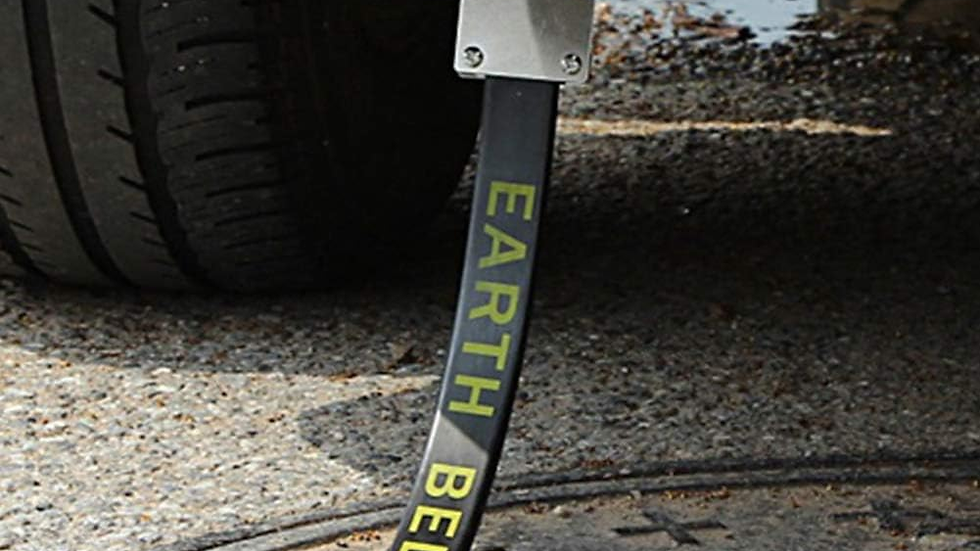
Use devices that shut ground your antennas; just high static can burn up equipment and create high receive noise.
Low humidity: Dry air prevents natural charge dissipation, so static accumulates rapidly.
Friction and contact: As dust particles or snowflakes move through the air, they repeatedly collide with surfaces (fences, clothing, vehicles, or each other). These contacts transfer electrons, leaving one surface positively charged and the other negatively charged.
Dry, insulating materials: Dust and snow are often insulators, so the charge cannot easily leak away. This allows voltages to build up to thousands of volts.
High airflow and turbulence: Moving air increases particle–surface interactions, accelerating charge separation.
In extreme cases, the static can cause sparks or make people feel shocks when touching the fences and arrays, especially when they are grounded.
Hazards: In industrial or agricultural settings, static from dust or snow can ignite combustible materials, damage electronics, or cause nuisance shocks. If K0UO ungrounds his antennas in dry or thunderstorm conditions and holds a fluorescent light tube bulb near the open feedlines, controls boxes, or antennas, the bulb easily lights up and will make you a believer in the static hazards.
Summary
Getting under a tree is probably one of the worst places, and we all know to stay away from the golf course or in a high-profile vehicle, such as tractors out here in KS.
K0UO has miles of wire in the air at the rhombic antenna farm. During a lightning storm, if the arrays are not grounded, you can actually hold a fluorescent light bulb near the termination areas, and it will illuminate. That should send you a message. Even static electricity build-ups during lightning storms can be very dangerous.
K0UO uses a lightning detection app on his phone, and any time the storms are within about 30 miles, he makes sure everything is secure and grounded.
Read up on single point ground systems.
Protecting a ham radio station in Tornado Alley requires a comprehensive approach to lightning safety. K0UO’s system combines manual controls, AI monitoring, extensive grounding, and specialized devices like strike counters to safeguard equipment. By connecting feedlines only during operation and grounding everything else, the station minimizes risk. Regular maintenance and adherence to NEC and R56 standards keep the system reliable.
Normally at the base of the tower, we would have at least six or eight 2-inch straps running from it. Number 6 gauge wire or braided straps would be evaporated, but not the strap.
K0UO went to Polyphasers Lightning EMP School in Nevada a number of years ago. They had a unit called Big Bertha that could create lightning strikes. Where the science is proven in controlled experiments.
Creating a protection scheme is a significant undertaking. You need to read and fully understand for you to successfully create and implement a protection scheme for your radio station.
Grounding is a science that over the past years now has decades of proven data; it's not voodoo witchcraft, like some hams still believe.

Resources for Antenna and Station Grounding
For a ton of info see
Motorola R56
Be careful what you read in some of the ARRL books for amateur radio. I suggest the Polyphaser book by Roger Block; it is a much better reference, keeping up with current practices.
So, not the best book, but still some useful info: https://www.arrl.org/grounding-and-bonding-for-the-amateur


SEE ALL BLOGS Here, & Just Skip the first few pages, and go to the Blog List


Comments