


Rhombic Antenna Farm, The King of HF Wire Arrays

Updated: 1 day ago

By reading this blog you will learn more about the Legendary HF Rhombic Array, how they work, field testing and construction
K0UO is engaged in the "Lost Art of Rhombics" a nostalgic classic array, employing four large wire antennas at the Kansas QTH to focus on major DX regions, utilizing phasing for improved steering. These antennas rank among the largest HF wire-type amateur radio antennas currently in use globally. K0UO designed and constructed the entire station, including the substantial Rhombics, towers, and beverage antennas, conducted far field measurements, and has access to over 1,200 acres of owned, right-of-way, oil field roads, or leased land surrounding the antenna farm site for far field testing. With a comprehensive array of towers and antennas, it is a significant antenna farm at the primary site 1.
"Over the past 30 years, my focus has been on exploring the limits of high-gain traveling-wave arrays. On my Blog and QRZ profile, I’ve documented the complete modeling, far-field test data, and construction history of the antenna farm for anyone interested in the technical implementation." Steven Walz , K0UO
K0UO antennas are supported by three decades of thorough testing, modeling, and transparent documentation by RSI Corp. The past physics and engineering speak to how much gain the rhombics have.
K0UO with the RSI Corp antenna Far Field Test Range uses advanced RF measurement to confirm.

"K0UO, Miles of WIRE, in the AIR, and ON the AIR daily"
K0UO has set up a second antenna site, (which is much larger than the original site 1), re-engineering nine X-Rombic arrays with a modern design, and positioning them on a hilltop where K0UO once had a 300-foot tower. The tower's top at this location is 500 feet Height-Above-Average-Terrain (HAAT) above the surrounding ranch land, allowing for an extremely low take-off angle. These nine updated X Rhombic arrays have 1200 feet on each leg,or a total of 4800 feet for each array, equating to about 72 wavelengths for the 20-meter ham band.
Providing an array for every 20 degrees of direction with "Smart Control" to ensure global coverage. These arrays also employ "SMART ANTENNA" technology, allowing them to rival genuine HRS Curtain arrays by achieving over 20dB of gain with real-time Smart control phasing and pairing.
This new site significantly surpasses and Dwarfs the main "K0UO Rhombic Farm", while incorporating "Smart Technology" arrays an impressive site overall.
Consider this: each single array spans an area of more than 11.32 acres, which is nearly equivalent to 10 football fields, see the site layout later in this Blog.
The K0UO Rhombic Farm and RSI Corp Antenna Test Range Site, known as "The Antenna University," leverages the 4KS Walz Airport and its surrounding area as a practical learning environment for Scientific, Technical, Engineering, and Mathematics (STEM) antenna projects in an outdoor real-world setting. If an organization, university, or school has an antenna research STEM program, please contact use.
The KØUO Rhombic Antenna Farm in Kansas spans numerous acres, featuring "Miles of Wire in the Air & On the Air". Renowned as an antenna Experimenter, Rag-chewer first, and DXer for fun! The K0UO Rhombic Farm is so large it has antennas on both sides of a major U.S. Highway (U.S.281)!
"Building a great station requires years of Passion, Hard Work, and Commitment".
The new even larger K0UO additional site number 2
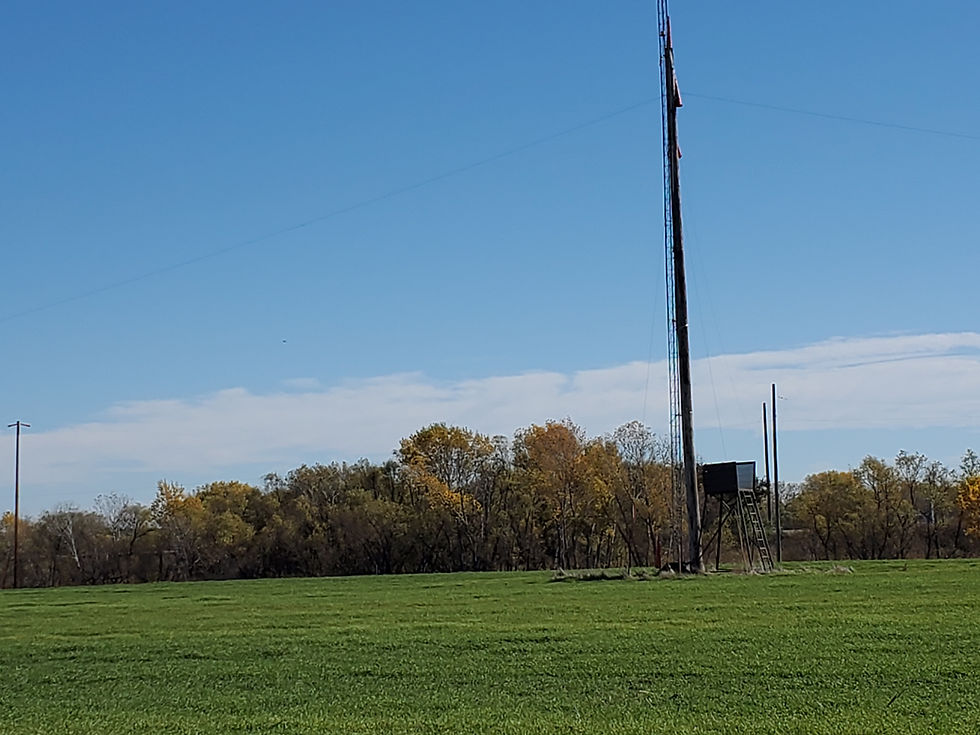
The "KING of Wire Antennas" is a K0UO type Rhombic.
The large arrays, designed for 40 meters and above, have legs measuring 600 to 800 feet, spanning over 1200 feet end to end. They each cover about 7 acres, equivalent to five football fields. The V-Beams are 1,200 feet on each side, requiring acres of space. mounted on 80 to 160-foot tall poles or towers. The front-to-back ratio exceeds +40dB. All antennas use 3/8" Triple Galvanized Wire Rope Cable. For traveling wave arrays, copper isn't necessary; a little resistance is acceptable on traveling wve arrays.
Steve Walz K0UO says: "I hope others will continue the tradition of large Rhombic Arrays, I am fortunate to have access to the surrounding acres for the antenna site." The K0UO site features miles of HF wire high gain "Rhombic Curtain and V Beam arrays," unmatched by any yagi. DXers and Contesters see
"You need some Game, get the Gain" Antennas.....before Amplification
Modern alternatives still can't beat the big HF Rhombic:
Using K0UO +90% efficient Rhombics, re-entrant re-phasing system no power is lost by terminating resistors.
Now days the biggest gun contest or DX stations would use a
4, over 4, over 4, stacked 40and 20 meters Yagis at ~180 ft is very high-end (gain often ~10–13 dBd real-world, depending on phasing/spacing ~0.5–0.75λ vertical).
However a properly sized rhombic at 100 ft apex (long legs) can offer higher forward gain (3–5 dB more in modeled comparisons at low angles), vastly better F/B, with multi-band capability. If using a K0UO 90% efficiency re-phasing system, you would gain even more gain, and no moving towers to wait to turn or parts to breaks! An added bonus is diversity TX & RX, reducing fading.
The Rhombic has a reputation of "waking up earlier" and "going to bed later" than a yagi of the same gain.
Yagis even stacked ones, (4 over 4 over 4 at 200 feet have less gain than the re-entrant Rhombic Array)
Log-periodic antennas
Wire antennas with tuners
Phased dipoles
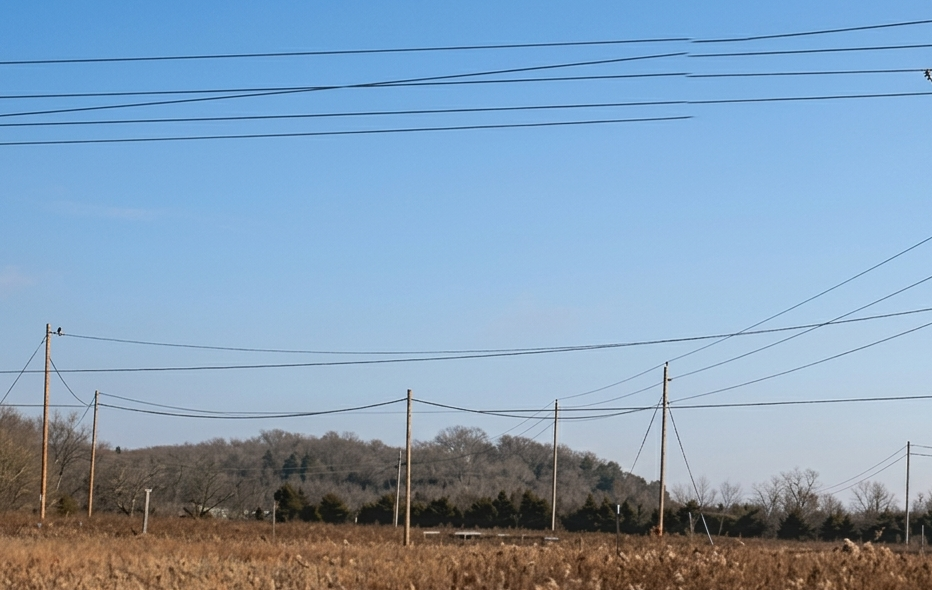
NOTE, Don't underestimate the performance of the Rhombic, unless you have personally built and used one. Because of their excessive size (area) covering many acres, you see their real advantage of thousands of feet of wire in the air, which creates receive signal diversity, by capturing signals at different times and different angles, vastly eliminating fading QSB, and firing out the transmitted RF in the same way. Traveling wave antennas are very unique and unlike many other antenna in common use, and modeling will not show this major advantage.
Rhombic Array have a Lower Noise Floor: They exhibit a lower noise floor, improving overall signal clarity and quality.
A Rhombic Array has high gain, using a very low radiation angle transmit pattern, for long distance (DX) communications.
Rhombic Cost-Effective Scalability: Needs just wire, insulators, and four elevated supports (such as poles, trees, or towers). It provides gain levels similar to large multi-element rigid Yagi antennas, but with significantly less structural complexity.

The Diversity RX & TX system is using AI‑assisted real time propagation for the rhombic & V-Beam antenna optimization. This is a new AI powered tool from a private ionosonde, or chirpsounder radar system for the DoD, which refers to an ionospheric sounder operated by commercial companies, private research institutions, or private defense contractors rather than traditional public government agencies (like NOAA in the US or the Bureau of Meteorology in Australia).
AI-controlled antenna switching and along with the lightning protection matrix:
With real-time MUF, F layer, D layer absorption, and information on Sporadic E and other Solar & Aurora conditions, the AI-controlled antenna switching matrix confidently selects the best available antenna. This selection is based on conditions, direction, and the necessary takeoff angle of attack for optimal signal strength to specific DX stations, and it can be automatically chosen.
This private ionosonde, or chirpsounder radar system for a DoD network system, confidently predicts HF conditions over intervals from 1 minutes to 24 hours. Along with the live DX spots, it grants the operator complete control over the extensive arrays at their disposal, enabling them to make decisions with ease. Managing the vast arrays is straightforward and effortless
Utilizing a DPS unit (Digisonde-Portable-Sounder), a commercial high-frequency ionospheric radar, it captures electron density profiles, virtual height, Doppler spread, and wave polarization in real time with AI assistance. It assesses all parameters of HF radio signals reflected by the ionosphere and automatically computes the local ionospheric electron density profile in real time.
.K0UO (summer of 2026) now also features a Chirp Sounder which is a software-defined radio-based receiver for observing ionospheric sounders (ionosondes) and over-the-horizon radars. Now working with the AI-assisted propagation optimization control system, this is also major advancement for the station.
While public ionosondes belong to global open-access networks, private systems are typically deployed to provide proprietary, hyper-local, or high-resolution data for specific defense, aerospace, or commercial communications needs.

The site uses repurposed equipment from W6AM's old station, W7YRV, Voice of America, DOD, The BBC and other legendary stations.
Historic Preservation: The K0UO station actively preserves and utilizes parts and insulators from legendary, historic radio arrays, including those from W6AM (Don Wallace), W7YRV Roy, BBC, Voice of America (VOA) and many others.
W6AM
In the 1950s to 1970s W6AM the DXer & Contester known world wide, had many 1000 footers, and one was 1500ft. In fact I am still using some of W6AM's hardware on my antennas, a living memory to W6AM, On the Air Daily.
Roy W7YRV/SK in AZ, had nine at one time, and he developed the X Rhombic, which he had built one for every 20 degrees, (18 total). That was a truly remarkable accomplishment for an amateur station (You must see his page, great info w7yrv.blogspot.com/2013/). It was an extreme pleasure for K0UO to meet Roy, even in his 90's, he was still an encyclopedia of knowledge when it comes to very high gain antennas. K0UO is very privileged that W7YRV has entrusted him with the parts, schematics, drawing, and photos of these fabulous antennas.
W1VDE Roger in OR has six, and is still on the air daily, also VK3MO, and in Texas N5APR and W5BY Jeff, had a few at their ranch's, KL7KK in AK has one along with a few VK's, and V55V (V55W) in Namibia had 2 but they are now down, and TF4M also put up a large HF one at one time.
The Old V55W station in Namibia was about the same size as my Rhombics but not as high.
Martin Walter, V51W, near Omaruru, Namibia, has spent the past 2 decades improving his station, which likely accounts for his V55V station’s increasingly better signal.
After trying all possible antenna systems, he is convinced that his wire rhombic antennas are the best choice. He uses three of them; two that are 160 meters on each leg to the US and Europe, and one with 80-meter legs, also aimed at Europe. Their gain depends on the band and can top 10 dB.
V55V was used for countless contest and DXpedition activities during the past years, but now, Walter is planning to shut down the station and move back to Germany.
Ian VK3MO sent me this overview in Aug. of 2025, "My single rhombic is still in the air and functional. My rhombic is supported on 4 X 132ft steel towers guyed with non metallic guys. The rhombics are stacked with one at 70ft and the other at 132ft. There is 550ft per leg giving a total radiating wire length of 4400ft. My original objective was to build an antenna for 20M with gain. It obviously works well on the other bands. I run open wire feeders from each end of the rhombic back to the control box where I have a large TCI balun and a tuner. I then have a 600ft run of LDF-450 Heliax back to the shack. (it is a shame to lose a dB on the feed-line).
I use 2.84mm diameter hard drawn copper wire for the antenna and feed-line. It has survived thirty years without breakages. I started out using stranded copper-weld wire and it failed after two years. It developed rust bubbles and started breaking regularly. I pulled it down and started again with the hard drawn copper and not a single problem in thirty years. (I suspect the stranded copper-weld wire may have been poor quality. I purchased it from the wireman and the results were disappointing. My rhombic is aimed at New York". 73 VK3MO
See others with rhombic arrays @ https://www.k0uo.com/post/hams-with-rhombic

The Steve Walz K0UO, is the largest ham radio station and wire HF antenna farm in the world with use of over 1200 acres for antennas, towers and the RSI Corp antenna far field test range. The K0UO site has miles of HF wire very high gain "Rhombic Curtain and V Beam arrays". They are the King of HF Wire Antennas that no yagi can bet.
Engineering Insight
Rhombics are like the diesel trucks of antenna design — rugged, reliable, and built for long hauls. A Rhombic array can make your ham station a "Super Station". But if you need agility, precision, or compactness, other designs may suit you better. That said, big rhombics wire arrays still hold their own in niche applications, like DoD, Broadcasting, and amateur ham radio where bandwidth, gain, cost, and simplicity matter most.
The rhombic is the largest and most refined of the long-wire antennas, consisting of two V beams, open-end to open-end. The result is 4 wires contributing aligned lobes for higher gain and narrower beam-width. And the rhombic suppresses unwanted side lobes better than the V beam antenna.
Resistors play a vital role in sustaining a stable traveling wave within antennas by effectively absorbing the energy that reaches their ends. This absorption prevents any reflected energy from traveling back and forming standing waves, which can significantly degrade the antenna's performance. By ensuring that the current maintains a progressive phase along the length of the antenna, these resistors support unidirectional wave travel and contribute to stable radiation patterns. Matching the resistor value to the characteristic impedance of the antenna is essential for minimizing reflections, which leads to consistent traveling wave behavior. This consistency is crucial for enhancing both directionality and bandwidth, allowing the antenna to perform effectively in various applications and under different conditions.
I am now using the large HF Re-entrant Rhombic arrays, and they are the highest forward gain antennas with its 90% efficiency, now with very high gain, and low noise receive characteristics. So, the Rhombic Arrays can beat the massive stacked HF beam arrays that I had up before.
In testing the gain compared to my full size 40 meter two element wire beam at 190 feet high, the rhombic array is truly unbelievable,
Gain before Amplification
See, High gain HF Rhombics, bets Yagi Beams @ https://www.k0uo.com/post/high-gain-bets-beams
Major Advantage, all long Traveling wave antennas are known for fantastic Improvements in the reduction of signal fading, which is called QSB by amateur radio operators, for both transmit or receive.
It is like Diversity, theses large arrays cover a lot of area. My station uses miles of wire, so you are both listening and transmitting signals coming and going at different angles. Signal-to-noise ratio (S+N/N ratio, or SNR) is one technical aspect not too many amateurs give a second thought about, however if you can't hear them you can't work them. This is very apparent on audio reception, long Traveling wave antennas eliminates much of the audio amplitude fading for both transmit or receive. The RF signal is almost never in a stable phase relationship at both places at the same time. This means the signal will have random phase and amplitude differences. The arrival angle and polarization of incoming signals will change. This generally results in the fading, by having many wavelengths of wire in the air, the chances are that while wire experiences a fade, the other will not. The power is in the diversity size of the array, and what you can now hear with out QSB fading. Traveling wave antennas are just quieter, with substantial noise reduction. That is why so many people use the Beverage receive antennas also.
Old amateur operators really never die.
They just fad away (QSB)
In 2021 I added, a fourth Rhombic array, a vertical polarized, 1/2 Rhombic antenna at 160 foot, which is dependent on the quality of the ground connection to the earth (Ohmic resistance of the ground rod system) it is using a 5400 foot deep old oil casing and pipelines under it to reduce ground loss. The antenna is now 14 waves on 40 meters (1820 feet) centered at 160 feet, for more info see the post in this blog the about vertical polarized Rhombic antennas. https://www.k0uo.com/post/vertical-polarized-1-2-rhombic

The K0UO 1/2 Rhombic is centered at 160 foot high, on one of the tall towers
See the Half vertical rhombic page https://www.k0uo.com/post/vertical-polarized-1-2-rhombic
V BEAMS (Vee)
The QTH also has three long 1200' V-beams, installed on 75-100 foot wooden-poles, a V Beam is just 1/2 of a Rhombic. These antennas are currently assisting a group with a project using TDoA (Time Difference of Arrival ) Direction Finding (DF) checking integrated statistical localization algorithm which allows the localization of HF transmitters based on AoA (Angle of Arrival). (That project has ended 2023) see @ https://www.k0uo.com/post/v-beams-hf-wire-antenna-veebeam
Why I went to the big Rhombic arrays
I would have saved a lot of money $$$, time, frustration, and regret, if I had not put up the 200 ft rotating towers, with all the aluminum beams. This was back in the late eighties and 1990s, when my wife moved back to the Kansas Ranch, and I started building the dream station.
For first 15 years on the ranch, I spent each spring, summer, and fall working on mechanical things. It was just non-stop repairs and replacement of components.
Each winter the big Arctic ice and wind storms out on the high open prairies, east of the Rocky Mountains in Western Kansas, destroyed every aluminum or fiberglass antenna that was installed, even the commercial ones rated for 125 mph.

ICE LOADING at the K0UO Antennas, that is why K0UO took down the other tall towers and standard aluminum beams, the Rhombics with the heavy cables using commercial hardware, and vibration dampers stay up in the ice.
Replacing aluminum elements and 3-in booms, that got bent by all the ice and wind from the previous winner. I was fixing rotors, mounting plates, an assembling new antennas, while missing thousands of QSOs contacts, because of all the work. The work was required just to build the station back, and keep it going. Also it was very expensive, and frustrating to be replacing something that was new last year.
I was a younger man then, but it was very dangerous working on a four Element 40 meter beam, at 200 ft, that had broken elements and booms. The pieces could drop and take the next sets of guy wires below you with it. While you're on top of the tower, not a good thing.
I spent a lot of years rigging those beam antennas, that was very hard work, and at elevation on the Towers.

Today, the most competitive Big-gun contests or DX stations generally employ large beam antenna systems, which are essential for attaining the best communication distances and signal clarity.
Most setups includes a single band 4, over 4, over 4 stacked 40m Yagi antenna configuration, positioned at an impressive height of approximately 180 feet. This setup represents the pinnacle of high-end antenna technology and is designed to maximize performance. The gain of such an arrangement often reaches around 8 to 10 dB in real-world scenarios, a figure that can fluctuate based on various factors such as the phasing and spacing of the elements, which are ideally set at around 0.5 to 0.75 wavelengths vertically. However with large slow moving mechanical roter which alway have problem either related to weather or mechanical, these systems and towers can cost tens of thousands of dollars (many, a lot more), and thousands of hours to build and maintain.
.
In contrast, a properly sized rhombic antenna with an apex height of 80 to 120 feet and long legs can provide even more significant advantages. This type of antenna is known for its exceptional forward gain, often demonstrating an increase of 5 to 8 dB or more when compared to single band yagis. This characteristic is particularly beneficial for DXing as it allows for better signal reception from distant stations. Moreover, rhombic antennas are renowned for their vastly superior front-to-back (F/B) ratio, which minimizes interference from signals coming from the rear, thus enhancing overall communication quality.
Additionally, the multi-band capability of a rhombic antenna system adds to its versatility, allowing operators to switch between different frequency bands without the need for multiple antennas. This is particularly advantageous in dynamic contest environments where conditions can change rapidly. Furthermore, if one were to incorporate a K0UO 90% efficiency re-phasing system into this setup, the benefits would be even greater. This system enhances gain further while eliminating the need for moving towers or mechanical components, which can be prone to failure and require maintenance.
Another significant advantage of using a high-efficiency re-phasing system is the capability for diversity in both transmission (TX) and reception (RX). This diversity helps in reducing signal fading, which is a common issue in radio communications, especially over long distances or in challenging atmospheric conditions. By employing such advanced technologies and configurations, operators can ensure that they maintain a competitive edge in contests while achieving reliable and high-quality communications.
The old books say, "The gain of a rhombic with side lengths of four to five wavelengths is over 40 times that of a half wave dipole. About one half of this gain is realized by using two wave lengths to each of the four sides" From the old DoD Book, EI8IC Reprint
FACT: The re-entrant K0UO Rhombic Arrays have much more gain than the massive stacked HF yagi beam arrays, that I had up previously. https://www.k0uo.com/post/understanding-re-entrant-rhombic-array-antennas-design-features-and-applications
Geographic Propagation Advantage of Kansas at this station, with less than 5 to 10 degrees take off angles, K0UO is always the first to open to Europe, Asia over the poles to western Asia & Mideast, and it is always open to South America.

The K0UO Rhombic Wire Arrays using robust commercial power line components, complete with switches for immediate direction changes. In over 20 years, the antennas themselves have never failed. Occasionally, there are issues with coax connections or the control boxes, but these are safely accessible on the ground. The best part is that even at my older age, I can spend 99% of my free time On the Air, rather than fixing broken antennas and working on 195 foot tower!
The big Traveling Wave antennas, like the Rhombic and V-beams have no SWR, and are super quiet when receiving, see below. Another big bonus is no waiting for the big beams to turn, I have instantaneous Direction Change.
NO STANDING WAVES
Most Radio Amateurs don't know that a key concept with traveling-wave type antennas like a Rhombic, that the current and voltage levels are the same everywhere along the antenna conductors, so no standing waves on the antenna itself. The rhombic antenna therefore has the distinct advantage of working over very wide frequency ranges. SEE BELOW

By using remote switches, there is No waiting for a rotator to turn, just every direction, every band, every time with the sites multiple antennas.
My area has major ice storms each year but the Rhombics survive
Efficiency, Flexibility, Reliability
A horizontal rhombic antenna radiates horizontally polarized radio waves at a low elevation angle off the pointy ends of the antenna. A rhombic antenna does have the very distinct advantage of working over very wide frequency ranges with good SWR and gain, something a basic monoband Yagi can never do.
The rhombic has major advantages over other antennas.
It is easy to construct and somewhat non-critical of dimensions.
It offers very wide bandwidth performance, being competitive with large log periodic arrays.
If a ham needs an easy-to-install very broadband antenna, that can easily handle high power, a rhombic is a worthwhile antenna to consider.
The many spurious lobes, while they do rob some power from the main lobe, but can also fill in other directions while transmitting. Although the upper elevation angles still bristle with lobes, they are generally all of low strength, and therefore hardly effect to antenna performance. And actually this is a plus for Hams, just like fishing (the more hooks in the water the better, with hams sometime more lopes help), we are looking for contacts. In fact on 40 and 20 meters in daytime from my Kansas location high angles lobes help me work more north American stations, that is why the old ARRL Rhombic was stronger, then their newer beams in use today. see https://www.k0uo.com/post/hams-with-rhombic

The arrays are all modeled using NEC5 and HFTA (High Frequency Terrain Analysis) to evaluate the take of angle of the various antennas over real ground, then I do far field testing.
Rhombic vs. Yagi: Feature Comparison
Feature | Rhombic Antenna | Yagi-Uda Antenna |
Design Type | Traveling wave (non-resonant) | Resonant, parasitic array |
Gain | Up to ~18 dB (with long legs) | 6–10 dB typical (3–9 elements) |
Bandwidth | Very wide (multi-octave) | Narrow to moderate (depends on design) |
Efficiency | ~40–50% (terminated); up to ~90% with re-entrant | >90% typical 70%- |
Directivity | Very High (unidirectional if terminated) | High (narrow beamwidth) |
Size & Footprint | Huge — hundreds of feet per leg | Compact — easily mounted on towers |
Polarization | Horizontal- 1/2 Rh Vertical | Horizontal or vertical |
Installation Complexity | High — needs large land and tall supports | Moderate — rotatable and stackable |
Rotatability | Fixed direction | Rotatable |
Use Case | HF DXing, fixed-path comms | HF/VHF/UHF, rotatable beam for general use |
Performance Optimization
I now use a Re-entrant Rhombics, which are 90% efficient, by re-phasing the power back in the antenna, instead of heating up termination resistors.
It can be truthfully be said, that "a Rhombic antenna occupies more space per db of gain than any other antenna", however if you have the space, you will have very high RF gain. The Rhombic is a very high-gain antenna however it requires a lot of acres, and the efficiency when terminated is only about 50%. An alternate impedance-termination system, which was only used for a few large broadcast stations where input powers were above 50 kw, is called the re-entrant line termination. Clyde Haehnlen SK, developed the specifications for the Voice of America antenna system at the Bethany, OH Relay Station. That re-entrant Rhombic was 90% efficient by re-phasing the power instead of heating up termination resistors. In that system, the Rhombic was terminated in a transmission line, which in turn was coupled back to the input through the proper voltage-matching and phasing networks. Thus, the energy in the dissipation line is fed back to the antenna, so that considerably less than 50 percent of the energy is wasted. The old VOA Bethany site in Ohio had efficiency up to over 90%. This feeds-backs the wasted RF energy "In-Phase", back into the feeder end of the antenna. For any variation from the stubs frequency, the stub must be returned.
K0UO is now the only station using re-entrant line termination equipment, which is re-phasing the power instead of heating up termination resistors. The Re-entrant Rhombic array is one of the highest forward gain HF antennas with its 90% efficiency, now with very high gain, and low noise receive characteristics.
Clyde provided Steve with design information for re-phasing a few years ago before his passing, which he is using the array on many ham bands 160 meters to 6 meters, which involved considerable engineering time to get it right, this was not needed by the VOA in the 1940s, they only used a few frequencies.

Time must be spent on the layout of the antenna, you must have a plan on what parts of the world that you want the main beams headed at. The lobes are only 20 degrees wide, so survey and layout work is a must, do your homework first.


ABOVE: Getting the hardware ready, 1000s of parts used at the site


The first 4 poles with set by a cross country power line company. Most local power utility groups can only drill a 18" diameter hole and set 45 foot poles. After that I set them all myself


• Internal Gas Discharge Tubes, Capacitors and Resistors for an lightning arrester
• Can withstand multiple minor surges and shunts them to ground
• Bleeds off static charge collected from wind driven snow, rain and dust
Re-entrant Rhombic now used at K0UO
The Voice of America antenna system at the Bethany, OH Relay Station used re-entrant Rhombics, which was 90% efficient by re-phasing the power instead of heating up termination resistors, in this system. My antennas also uses the re-entrant system, the Rhombic is terminated in a transmission line, which in turn is coupled back to the input side, through the proper voltage-matching and phasing networks.

Multi-band stub switching is the practical solution for operating a re-entrant rhombic across multiple HF bands (like 160 m through 6 m coverage at K0UO) while maintaining high efficiency (~90%) and low SWR without constant manual retuning. Since each stub (or stub set) is resonant and frequency-specific — "for any variation from the stub frequency, the stub must be retuned" (as noted in classic re-entrant designs and your own documentation) — broadband performance isn't feasible with a single fixed stub. Instead, use pre-tuned, switched stub networks per band or band group.
A drawback of rhombic antennas either due to load termination or presence of minor lobe due to open ends can be overcome by using re-entrant rhombic antennas.
The combination of multiple antennas serves as an arrangement that provides combined directivity thereby increasing the radiation efficiency to 90% or more, which was 50%.
Just check out this overview of the "Amplified Re-entrant Rhombic K0UO System" as used on a DoD project, which provided reliable and efficient HF communications for a circuit to Guam from the K0UO site in Kansas. see at https://www.k0uo.com/post/understanding-re-entrant-rhombic-array-antennas-design-features-and-applications

Grigory Zakharovich Ayzenberg (Григорий Захарович Айзенберг, 1904–1994) was a monumental figure in Soviet radio desinging and building updated Rhombic Arrays.


The FCC Monitoring Station in Ferndale, WA while working at nearby FAA facilities. They were out in the middle of nowhere, and used a bunch of huge HF rhombics pointing in various directions. They had numerous receivers attached to them. Why did the FCC use rhombics? They just work!
FCC Ferndale closed in the 90s, and it's now just a huge undeveloped field.
Far Fields Testing
The K0UO & RSI Corp antenna range, and testing site has the use of over a thousand acres around the main antennas for far field measurements, using a portable tower or drone loaded with calibrated RF EME survey instruments (used for ham, DOD and Commercial), see the far field test page. https://www.k0uo.com/post/model-and-then-do-far-field-test
It is only after you actually measure the RF radiation pattern of what you simulate that you will gain a comprehensive understanding of what the antenna is truly doing at your specific location. This process involves several critical steps that are essential for accurate assessment and analysis.


I

A smaller 3wl per side, still has 16dBi with 28dB FB, my antennas are 4 to 6 waves on each side.
VK3MO Ian also had a stacked rhombic antenna with 8 wavelengths on a leg giving a total of 1340m of radiating wire. The upper rhombic is at 40M and the lower rhombic is at 21M. The rhombic had a gain of 23dBi at a take off angle of 5 degrees on 20M and is directed at New York. The rhombic was modeled using EZNEC and it has 3dB more gain than the 5/5/5/5 yagis. Both the yagis and the rhombic have a take off angle of 5 degrees which allows a comparison between the two antennas in the direction of New York. Ian sees the 3 dB rhombic advantage which validates the accuracy of the NEC antenna modelling software.

Traveling-Wave Antenna
See the animation below: The key concept with traveling-wave antennas is that there are no standing waves, which means that the current and voltage levels are the same everywhere along the antenna conductors. The animation below shows how a traveling wave antenna works (all types of traveling wave antennas). Due to ground resistance the electric field of the radio wave (E, big red arrows) is at an angle θ to the vertical, creating a horizontal component parallel to the antenna wire (small red arrows). The horizontal electric field creates a traveling wave of oscillating current (I, blue line) and voltage along the wire, which increases in amplitude with distance from the end. When it reaches the driven end (left), the current passes through the transmission line to the receiver. Radio waves in the other direction, toward the terminated end, create traveling waves which are absorbed by the terminating resistor R, so the antenna has a unidirectional pattern.
A directional antenna in which a traveling wave of electromagnetic oscillations is propagated along its geometric axis. Traveling-wave antennas are made either with discrete radiators placed along the axis at a certain distance from one another or in the form of a continuous radiator that extends in the direction of the axis. (The latter is considered as the sum of discrete radiators adjoining one another.) The Yagi antenna and the helical antenna belong to the first category; the dielectric rod antenna and the Beverage antenna belong to the second. There are also traveling-wave antennas consisting of several elements, each of which is a traveling-wave antenna of the second type (the rhombic antenna and others). This type of antenna is used in receiving and transmitting installations for all wavelengths of the radio band. The traveling-wave antenna has its maximum radiation (reception) in the direction of its axis. The directivity is D = kl/λ where / is the length of the antenna, λ is the wavelength, and k is a coefficient that depends on the directivity of the individual radiating element, the phase velocity of the traveling wave, the relationships of the current amplitudes in the radiating elements, and other factors. The value of k usually lies in a range from 4 to 8. The directivity reaches a maximum when the phase velocity v of the traveling wave is somewhat less than the velocity of light c and equal to v = c • 2l/(2/ + λ) The typical characteristics of a traveling-wave antenna are the axially symmetrical shape of its three-dimensional radiation pattern (that is, the shape of the pattern is the same in any plane passing through the antenna’s axis) and the maintenance of adequate directivity (in the majority of traveling-wave antennas) over a broad wavelength range. The first characteristic becomes increasingly evident with an increase in the ratio l/λ and the axial symmetry of the radiation pattern of each radiating element. REFERENCE Aizenberg, G. Z. Antenny ul’trakorotkikh voln [part 1]. Moscow, 1957. G. Z. AIZENBERG and O. N. TERESHIN

How do the Rhombics preform?
A detailed modeling analysis of these rhombics has been done. Narda meters are used for testing both E and H fields in the far field, but the on the air tests and QSO's show the real power of these antennas. With each antenna having thousands of feet of wire, “The RF Gotta-Go-Somewhere”. Note, a full size 2 element 40 meter calibrated wire beam at 190 ft was used for a reference antenna.
Operation: Rhombic and V beam antennas are true traveling wave antennas, meaning the current propagates along the wire and radiates as it goes, with little reflection at the ends. In contrast, the Yagi antenna uses a combination of driven and parasitic elements to shape and direct the radiation pattern, and its current distribution is a mix of forward and backward waves due to mutual coupling.
Directivity and Gain: Both can achieve high directivity,
Bandwidth: V beams and Rhombics have broader bandwidth, while Yagis are frequency-specific.

Now that is Real GAIN!

A tapered feed system as called an Exponential taper (specific mathematical taper shape) or “Klopfenstein taper” for a rhombic antenna is a method of impedance matching that gradually transitions the feed-line impedance to the rhombic antenna’s input impedance. Because rhombic antennas have very high, frequency-dependent impedances (often 600–800 Ω or more), a direct connection to a standard transmission line (50, 75, or 300 Ω) would cause severe mismatch and reflections.
A tapered feed (also called a tapered transmission line) is a progressively changing-impedance section of transmission line—usually open-wire or ladder-line—whose spacing or conductor size gradually increases from one end to the other.
The “taper” allows RF energy to smoothly transition from one impedance to another with minimal reflections, similar to a tapered waveguide or a transformer with many tiny steps.
A tapered feed:
Matches the line impedance to the antenna input
Smooths impedance variations over a wide bandwidth
Improves VSWR
Maintains the rhombic’s inherently broadband performance

Remember, "The Best antenna is one that is, In the Air and On the Air"!
Watch "KC9VKV HAM RADIO QSO - ROGER-W1VDE - THE LOST ART OF RHOMBICS!!! - JIM FERGUSSON/TRAX - RS 695" on YouTube

K0UO near Kiowa, KS has High-Performance Antennas: Using large stacked LPDA-Yagi beams, Rhombics, V Beams, Curtain arrays, Four-square phased verticals on specific bands, optimized for low noise and very efficient and high gain
TO SEE the complete Blog list check @ https://www.k0uo.com/k0uo
Tip: It is a Blog so just skip the Blogs header and go down to the blog.

These are the largest 40-meter amateur radio Rhombic antennas in use
"God is always the guess operator and copilot, open hearts, open minds, open doors to anyone to join in the conversation "QSO"
OVERVIEW of all the Steve Walz K0UO pages: The nostalgic classic Rhombic antenna is a wide-band progressive traveling-wave (fast-wave) antenna, V-beams, Receive Directivity Factor (RDF) towers, VOA, W1AW, W6AM, Beverage traveling wave antenna, HF curtain, Broadcast tower, ham radio, balun for matching, IEEE, terminating resistor, E and H field, far field modeling, antenna measurements, NEC2 NEC4, wire antennas, Curtain antennas, baluns, VOA sites, LPDA, W6AM, W7URA, Feed-lines, and 4KS Walz Airport at Kiowa, KS.

From a technical and raw performance standpoint, it stands as one of the most powerful, unique, and highest-gain HF wire antenna farms in the world. While most ham systems depend on standard towers and stacked aluminum Yagi antennas, K0UO excels in the "Lost Art of Rhombics" with its expansive, multi-acre wire arrays utilizing the latest technology.
The K0UO's Primary site Antenna Overview:
Note: The Rhombic and V-Beams are usable on every band 160 to 6, however as showed below they are mostly used from 40 to 10/6 meters
For HF 40 - 6 meters, 40-meter resonant Rhombic traveling wave antennas have been designed, offering up to +14dB gain on 40 meters and even more on higher bands. These antennas are supported by 80 to 100-foot wooden poles. The Rhombics now incorporate a Re-entrant RF power re-circulating system, which significantly enhances efficiency to approximately 90%. This is achieved through proper impedance matching and phasing to recombine the RF power, as well as replacing the termination resistor.
40- 6 meter vertical polarized Rhombic firing to Central & S America @ 160' mid point on the main 195 foot tower
40 - 6 meters, Three 1200 foot V Beams (Vee-beam) on 75 to 100 foot wood poles
With the four rhombic arrays and three V-beams, the K0UO antennas effectively cover 14 directions, every 25°, the beam width of each array
4 element 40 meter wire vertical beam @ 100 foot fixed on Africa
2 element 40 wire beam @ 180 foot firing west (new 2023)
Full-sized 1/4 wave 4 Square verticals for 160 and 80 meters, (ON4UN/type, hanging off of the 195' tower, using elevated 1/4 wave radials)
40-10 meters, Distributed-fed Curtain Array (Billboard) @ 190 feet, which is the highest gain antenna with electrical beam steering from N Europe to the Middle East
HF 8 element Log-periodic Beam LPDA yagi-style log periodic for 20-6 meters @ 195 ft
160, 80, 60, 40 & 20 meters, dipoles @ 190 feet
The main ground system is tied into two, 5400 feet deep oil well casings (lightning protection) counterpoise
In 2022 a 100 foot hinge-over Rohn 55 was added, with a fixed wire 4 element 40 meter Delta Loop beam firing east to Africa (using a WA7ARK's model design), along with phasing of the various antennas together
The 2023 The Big project was a HF Log-periodic Beam LPDA yagi-style log periodic 20-6 meters @ 100' on the above tower, that can be used with other LPDA as stacked and or phased
A 160 meter loop was also added in 2023, using the support cables for the delta loop, and the 4 element 40 meter wire vertical beam, this bonus antenna is at a average height of over 100 feet
More on the Curtain and Four Squares
The site also has a very high gain Distributed-fed Curtain Array (Billboard) @ 190 feet, the Curtain is the highest gain antenna with electrical beam steering from N Europe to the Middle East
Full-sized 1/4 wave 4 Square verticals for 160 and 80 meters, (ON4UN/type, hanging off of the 195' tower, using elevated 1/4 wave radials)
Phase/stacked LPDA beams, fixed wire delta loop beams, and fixed wire yagi beams
Up to 8 Beverage receive antennas each 800' to 1500 foot long, each are 2 wire bidirectional providing 16 directions. In the winter of 2022-23 new RX beverage antennas were added that are 1500 feet and the antennas are across the U.S. 281 Highway, just east of the QTH on the creek, with feedlines under the bridge! The K0UO Rhombic Farm has antennas on both sides of a major U.S. Highway!
See the other blog pages about all of these other high gain arrays.
Welcome to K0UO.com, where we dive into the world of rhombic, curtain, and Vee Beam antennas at the Walz Kiowa, KS Airport 4KS. Explore the intricate world of rhombic antennas, Receive Directivity Factor (RDF) towers, Beverage traveling wave antennas, and so much more. Join us as we delve into the fascinating realm of antenna farming and ham radio technology.
K0UO is always inviting peer review, questions, and collaboration diffuses any perception of ego. The station and RSI Test range welcome scrutiny or technical discussions, you signal confidence rooted in facts rather than pride.
"If you're interested in high-gain wire arrays or far-field measurement techniques, all the modeling files, performance data, and real photos are openly shared on my QRZ page and blog. I always welcome technical discussions with fellow operators exploring similar propagation challenges."

The KØUO Rhombic Antenna Farm and Test Range: Home to the World's Largest amateur radio (ham), High Frequency (HF) Wire Antennas. Known as "Antenna University" We are using AI which is now becoming an advanced tool in analyzing, developing, and expanding research in RF and antennas.
See the blog below. Tip: just skip the Blogs header and go down to the blog.
The re-entrant K0UO Rhombic Arrays have much more gain than the massive stacked HF yagi beam arrays, that I had up previously. https://www.k0uo.com/post/understanding-re-entrant-rhombic-array-antennas-design-features-and-applications


SEE ALL BLOGS Here, & Just Skip the first few pages, and go to the Blog List


Can you imagine the time it took the build days?
People were always playing down rhombics because of their lower efficiency, Steve even figured out a way to solve that.
Remember this site had stacked monoband beams up to 195' to compare to before, the rhombics were installed.
This is just not theoretical, it's real world and quite a construction effort
Real info for the real DXer
Great info. Not interested in towers quite that high, sticking to 60 ft or so' Can go 1.000 ft or more in most directions. Great info and very hard to find, Too many Very deprived of acres in the city. Have 250 here work with.