


Cessna Skymaster C337, O-2 & C336 Oscar Deuce "DUCK"

Updated: Sep 6


Cessna Model 336 – The Foundation
The original Cessna Model 336 Skymaster stands out as a remarkable achievement in aviation history, being the first production version of an unusual push-pull twin-engine aircraft design. This model featured a distinctive configuration with a fixed landing gear, which contributed to its unique handling characteristics. The aircraft's layout included a tractor engine at the front and a pusher engine at the rear, a configuration that provided reliable centerline thrust. This design not only enhanced the aircraft's stability during flight but also offered pilots improved control, making it easier to manage in various flying conditions. The Cessna 336 had its inaugural flight on 28 February 1961, marking a significant milestone for Cessna as they ventured into innovative aircraft designs. Over the course of its production run, Cessna manufactured approximately 195 units of the Model 336 Skymaster. This early model laid the groundwork for the subsequent and more advanced Cessna Model 337, which incorporated several enhancements and refinements based on the feedback and performance assessments of the Model 336. During the era when the Cessna 336 was introduced, military aviation still favored aircraft with fixed landing gear, such as the L-19 Bird Dog and the Cessna 336 itself. The preference for fixed gear designs was largely due to their simplicity and reliability, which were crucial for military operations that often required rugged and dependable aircraft capable of operating in various environments. The fixed landing gear of the Cessna 336 not only simplified maintenance but also reduced the overall weight of the aircraft, contributing to its operational efficiency. The push-pull configuration of the Cessna 336 was particularly innovative for its time, allowing the aircraft to achieve a balance between speed and stability. This design philosophy was a departure from traditional twin-engine aircraft, which typically employed a more conventional layout. The Skymaster's unique engine arrangement provided advantages such as reduced drag and enhanced performance, making it an appealing option for both civilian and military applications. Overall, the Cessna Model 336 Skymaster represented a significant step forward in aircraft design, paving the way for future advancements in aviation technology.

0-2 Prototype
“Skymaster” which was a Cessna 336 #026 at Eglin AFB – Military Evaluation
In 1965, the US Air Force modified a Model 336 at Eglin Air Force Base, Florida to test whether the basic Skymaster concept could work for forward air control (FAC) and light weapons roles — testing roles the existing O‑1 Bird Dogs were struggling with in Southeast Asia. The U.S. did some of the test also at Eglin.
This modified aircraft (Cessna 336‑0026 / N1726Z, later N331KW) was fitted with four underwing hardpoints to carry smoke rockets, flares, or light ordnance.
The project was proof of concept for the Department of Defense to see whether a Skymaster‑type aircraft could survive combat conditions, carry useful payload, and still maintain the unique handling benefits of the push‑pull design.
It was not a production military aircraft — merely an evaluation platform to help Cessna and the USAF along with the USN to determine feasibility.
This prototype played a role in convincing the Air Force and Cessna that the Skymaster concept could be evolved into a viable military FAC aircraft, paving the way for the next stage of development — the Model 337 and ultimately the O‑2 Skymaster

OVERVIEW
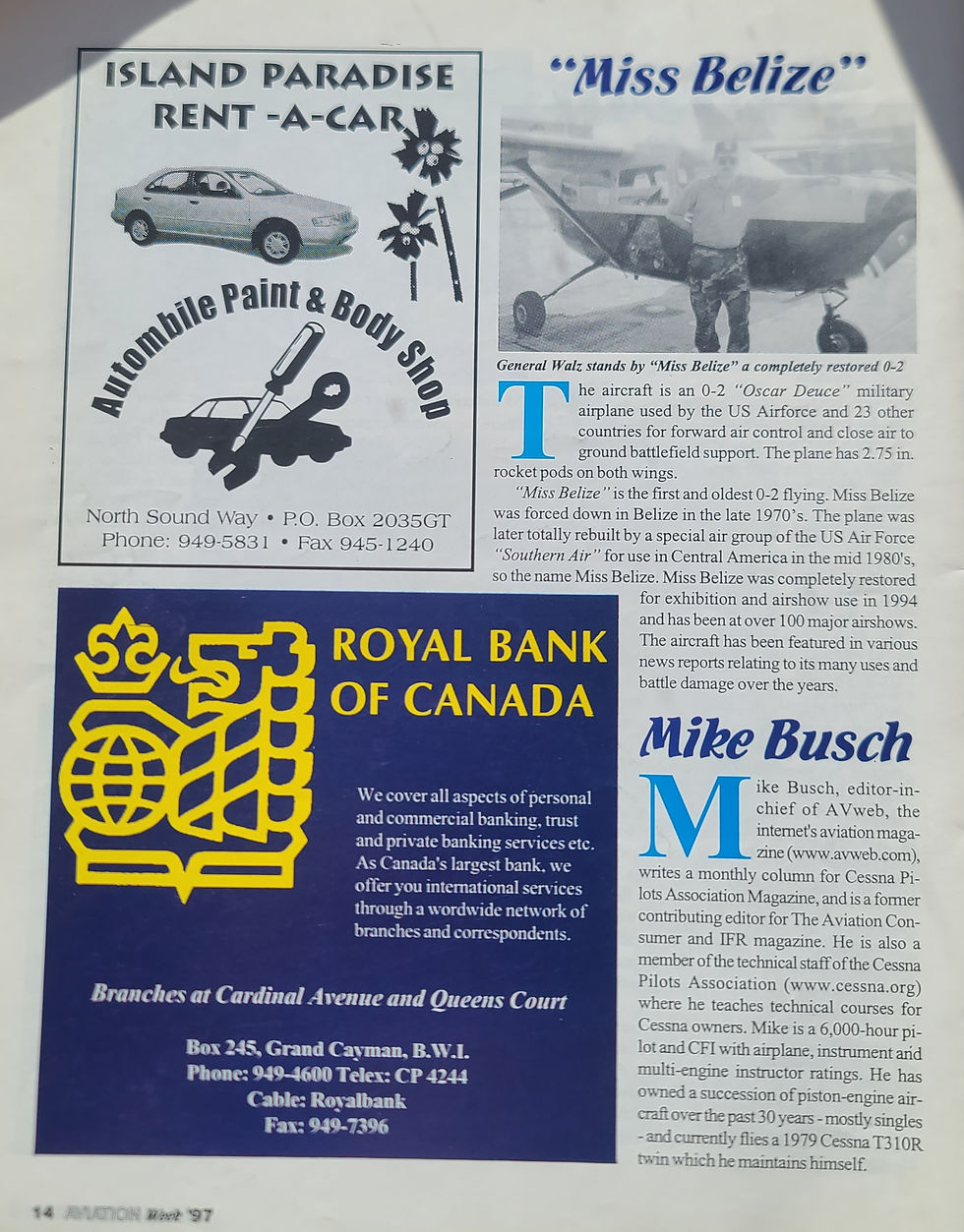
In 1965, the USAF at Eglin AFB, FL, modified a 336 with four sets of hard points on the wings, marker smoke system and had a one time STC approved by the FAA. The serial number on that plane is 336-0026. It was used a proof of concept Prototype O-2, to see if the idea was feasible for the 337's to be used as FAC aircraft. The Cessna model 305's (L19 Birdogs) were getting hammered in South East Asia, and the planned North American Aviation Bronco's were late in getting into production. So the Air Force was scrambling to find a stop gap aircraft that had the range, load carrying and had multiengine reliability to supersede the Birdogs. This 336 eventually became N331KW. At one time it was owned by a Belize national, Brig General Steven Walz who is now living in the USA. Belize Air Force markings V3-1KW registration. Flown at many large airshow in the 1990s as "Miss Belize, The Caribbean Queen". Someone from the British magazine 'Airforces Monthly' saw this aircraft and it was announced in the magazine that the Belize Air Force had an ex-USAF O-2! Even today there is a mention of this aircraft under the Belize Air Force heading in 'Air Forces of the World' and other military reference guides, despite the fact that he has now sold the aircraft and it is now back carrying its true identity (ie N331KW, first N1726Z in 1964). I have copies of all of all the doc's.
The O-2 Skymaster called "Miss Belize", Nicknamed the "Oscar Deuce" was the above aircraft. The plane had HF/VHF & UHF equipment and was showed in the "Dec 1996 QST magazine and Airforces Monthly". Miss Belize was flown by General Walz (K0UO) in over a 100 USA and Caribbean air-shows, and at numerous US Military Bases Air demonstrations in the 1990s. Note the Belize ham call "V31-KW" is also the Airplane's tail numbers, V3-KW see more photos on QRZ @ the call V31KW.


History of the Cessna Skymaster
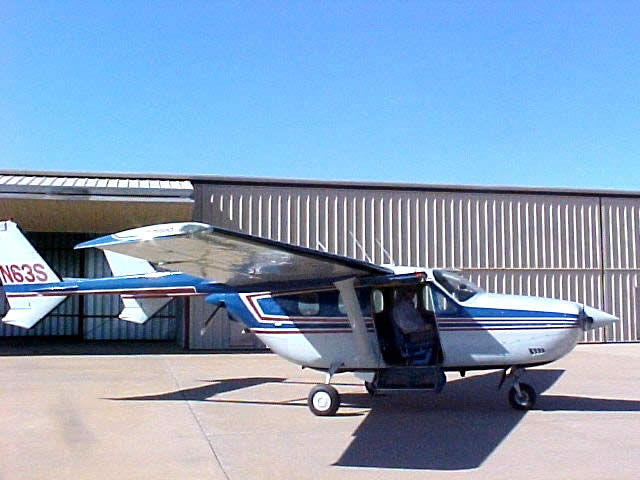
The first prototype Skymaster was a basic 4-seat, all-metal, high wing push-pull twin aircraft. The tricycle undercarriage was fixed and had two 175hp Continental GO-300-C geared engines.the same as use in the Cessna C-175 Skylark, the prototype was registered N34273 and was given the construction number of 633 (Cessna Experimental Series) and first flew on 28 February 1961.
The tandem twin engine arrangement — which Cessna called Centre Line Thrust — with the nose-mounted tractor engine and rear-mounted pusher engine, mitigated asymmetrical thrust issues in an engine failure, and had the added advantage of more easily allowing for a high-wing configuration for a clear field of view for observation. The U.S. Federal Aviation Administration (FAA) created a new center thrust rating for pilots.
SPECIAL CHARACTERISTICS
The Skymaster has different handling characteristics than a conventional twin-engine aircraft. Foremost is that it will not yaw into the dead engine if one engine quits. Consequently, it has no tendency to depart the runway if an engine fails on the takeoff roll. The adage, “dead foot, dead engine” used to remind a pilot in a twin which propeller to feather when an engine quits. When a Skymaster loses power, the pilot must use the instruments to determine which engine has failed. The Skymaster is also controllable at lower airspeeds than a comparable conventional twin. There is no minimum controllable speed advisory (Vmc) on the airspeed indicator. On the dead engine feather it and close the cowl flap. You lose about 15 mph.

C336: It wasn't until August 1962 that the first production aircraft flew and mid-1963 before deliveries began. Production models of the 336 were different from the prototype by having IO-360 engines, an enlarged cabin to take 6 people, inboard wing sections were redesigned and the vertical tail surfaces were enlarged. TOGW was 3,900lbs. 195 production 336's were built and were given construction numbers of 336-0001 to 336-0195.
On March 30, 1964, the prototype of the 337 took its inaugural flight, piloted by Dick Kember. Although it resembled the 336, the aircraft was extensively redesigned. The wing incidence angle was increased, the nose cowling was revamped, the tail boom angle was enhanced, a new dorsal air intake for the rear engine was introduced, and the 337 featured a retractable undercarriage. This was the first model named the Super Skymaster. The term "Super" was removed in 1972. The prototype was registered N5422E and had the construction number of 647. Production on the 337 started in February 1965. This model has a TOGW of 4200lbs and IO-360C engines. The cost of a new 337 would be around $39,950. A new construction number series was started for the 337. These basic models had construction numbers between 337-0001 and 337-0239.

In 1966 the 337A was produced. This had minor changes to the standard 337 and construction numbers in the range 337-0240 and 337-0525. There were 286 of them built.
1967 saw the 337B. TOGW was increased to 4,300lbs and there was an optional belly cargo pack. A further option on this aircraft was a turbocharged 210hp TSIO-360-A engines. The price for a T337B in 1967 was $49,500. Construction numbers for the 337B and T337B went from 337-0526 to 337-0755 and there were 230 of them built.
1967 also saw the building of a reduced scale version of the 337. This was known as the C-327. Only one aircraft was built and first flew on 4 December 1967. It was registered N3769C and had a construction number of 663 (Cessna Experimental Series). This aircraft later went to NASA as a 'full scale wind tunnel research unit'.


O2, In 1967 the USAF placed an order for Skymasters. Two variants saw action the O-2As for FAC missions and O-2Bs for psychological operations. The military designation for theses aircraft was O-2A. They had their own construction number sequence starting at M0001. The USAF also took 32 aircraft from the civil production lines. These retained their civil construction numbers and were fitted with loud-speakers and leaflet dispensers for psychological warfare duties. They were also different from the O-2A's by not having hard-points under the wings. The military still liked the fixed gear that the the L19 Bird Dog and the C 336 had but the they needed Skymasters fast back in 1967.
First flights took place in 1967 and the U.S. Air Force took its first deliveries in March of that year. The aircraft had a crew of two: pilot and observer. It was fitted with two Continental IO-360-C fuel-injected, flat six-cylinder engines. Among other possible considerations, the “push-pull” design allowed for a simpler one-engine operating procedure and a high wing mount for better visibility (and the handling characteristics should an engine fail).
The main differences between the 337 and the O-2 Nicknamed the Oscar Deuce, included the removal of the cabin step and spinners on the propellers, addition of observation windows in the cabin door and roof of the cabin. Engine fire detection equipment were added together with smoke generator equipment added to the rear exhaust system. The instrument panels were also different and they had an armament switches panel installed. Four underwing pylons for rockets, flares and cluster bombs. Military reconfiguration of Skymasters added observation windows, 7.62mm miniguns, LAU-59/A pods holding Folding Fin Aircraft Rockets, armored seats, self-sealing fuel tanks, and stronger landing gear.
By Randy Malmstrom
Since his childhood, Randy Malmstrom has had a passion for aviation history and historic military aircraft in particular. He has a particular penchant for documenting specific airframes with a highly detailed series of walk-around images and an in-depth exploration of their history, which have proved to be popular with many of those who have seen them, and we thought our readers would be equally fascinated too. This installment of Randy’s Warbird Profiles takes a look at the Heritage Flight Museum’s Cessna O-2A Skymaster.
Cessna O-2A Skymaster, Nicknames for the aircraft type included “Oscar Deuce”, “The Duck”, “Mixmaster”, “Push-Pull”, “Cessna Suck-Blow”, or “The B.S. Bomber” (for the O-2B psychological warfare — PSYOPS — variant). In 1966, the U.S. Air Force commissioned Cessna Aircraft Company for an observation and close air support aircraft. The O-2 was based on the civilian Cessna 337 Super Skymaster (the 336 Skymaster was introduced in 1961) and had fixed landing gear and a smaller engine; the 337 was fitted with a more powerful engine and retractable landing gear, and the “Super” was later removed from the name.
First flights took place in 1967 and the U.S. Air Force took its first deliveries in March of that year. The aircraft had a crew of two: pilot and observer. It was fitted with two Continental IO-360-C fuel-injected, flat six-cylinder engines. Among other possible considerations, the “push-pull” design allowed for a simpler one-engine operating procedure and a high wing mount for better visibility (and the handling characteristics should an engine fail).
Armament included: an SUU-11/A 7.62 mm Minigun pod, rocket pods on fixed underwing hard points to deliver smoke rockets, bombs or flares for defensive purposes or to designate targets for air strikes. The crew could carry machine guns and grenades.
Amour plates were installed under the seats and porous foam slabs were place in the fuel tanks during assembly to make them explosion-resister after being hit by small arms fire. This resulted in about a 5% loss in fuel capacity.
Among others, the O-2 was flown by the U.S. Air Force, U.S. Navy, U.S. Air National Guard, and many militaries and civil air guards flew them including the South Vietnamese Air Force. During the Vietnam War, the O-2 was seen as a replacement for the O-1 Birddog. The O-2A flew Forward Air Control (FAC) missions for the 20th Tactical Air Support Squadron. The O-2B variant was equipped with loudspeakers and a leaflet dispenser for use in the psychological operations (PSYOPS) role.
Vietnam: The U.S. military confidently introduced O-2s into Vietnam starting in May 1967. Transporting the aircraft to Asia required a strategic approach. Civilian pilots expertly flew O-2s in groups of four from Cessna’s Wichita, Kansas, plant to Hamilton AFB in California. At Hamilton, the Air Force efficiently removed all seats except the left front, installing additional fuel and oil tanks along with an emergency radio. These skilled civilian pilots then adeptly island-hopped from California to Vietnam. Flight leaders earned $1,000, while other pilots received $800 for the journey, plus airfare home. The Hamilton-Hawaii leg, the most challenging, spanned about 13 hours, with fuel capacity allowing for approximately 14.5 hours, ensuring a calculated margin for navigational precision.
O-2B (Cessna 337A)

Some dozen civil Cessna 337s were converted to O-2B, with loudspeakers under the right aft cabin window, a leaflet dispenser, a large blade antenna above the cockpit and a half-loop antenna above the front windows. In many cases they lost the propeller spinners. Unlike the O-2A, the O-2B has no underwing pylons and no windows in the bottom of the right cabin door.

Among others, the O-2 was flown by the U.S. Air Force, U.S. Navy, U.S. Air National Guard, and many militaries and civil air guards flew them including the South Vietnamese Air Force. During the Vietnam War, the O-2 was seen as a replacement for the O-1 Birddog. The O-2A flew Forward Air Control (FAC) missions for the 20th Tactical Air Support Squadron. The O-2B variant was equipped with loudspeakers and a leaflet dispenser for use in the psychological operations (PSYOPS) role.
U.S. Air Force records indicate that a total of 178 of its O-2s were lost in the Vietnam War.


The above Skymaster "Miss Belize" was also used to spot Cuban refugees in 1995-1996, over 600 were spotted and rescued, it then went on to many Airshows

SEE More about this Brothers to the Rescue later in this blog


The O-2 was flown in war with 5400 lbs, and known to take off full fuel and ordinance (WAR) at over 6000lbs. Nicknamed the Oscar Deuce, later some of the Skymasters have had issues regarding wing attachment points and and Cessna had a Supplemental Inspection Document (SID) “relatively involved” wing inspection procedures.
NOTE: O-2A wings are different from 337 wings, as there is additional structure on the rear spar to absorb the firing loads from the hard points. The wing spars and center carry thru spars are also physically larger than its civillian cousins. Even the wing attach bolts are two sizes larger than its 337 counterpart. An O-2 wing will not mate up to a civil fuselage.
O-2A wings are different from 337 wings, as there is additional structure on the rear spar to absorb the firing loads from the hard points. The wing spars and center carry thru spars are also physically larger than its civilian cousins. Even the wing attach bolts are two sizes larger than its 337 counterpart. An O-2 wing will not mate up to a civil fuselage.
I know of 337s that were fish spotters, they had a 175 gal fuselage fuel tank for a 22 hour endurance. It was not uncommon for those airplanes to take off at 6100 lbs, and fly a seven leg it from Houston to Cape Town South Africa. I have done it a few time myself


The 337C came in 1968 with a new instrument panel and 4,400lb TOGW (4,500lb on T337C)
Minor changes were made in 1969 to produce the 337D. Construction numbers in the range 337-0979 to 337-01193 with a total of 215 built.
Cambered wing tips plus other minor changes came on the 1970 337E. T337E's has a TOGW of 4,600lbs, construction numbers between 337-01194 and 337-01316 and a total of 123 built.

The 337E was the first Skymaster model to be re-built in France by Reims Aviation. This significant milestone in aviation history marked the beginning of a fruitful partnership between Cessna and Reims Aviation, which has had lasting effects on the production and distribution of aircraft in Europe. Reims Aviation, originally established as Avions Max Holste in 1933, has a rich heritage in the aerospace industry, contributing to various aircraft designs and innovations over the decades. The company faced numerous challenges, including financial stresses that ultimately led to a strategic partnership with Cessna. On 16th February 1960, Cessna acquired a 49% shareholding in Reims Aviation, which allowed the French company to leverage Cessna's extensive engineering and manufacturing expertise. This partnership facilitated the assembly of Cessna aircraft from kits supplied directly from the United States, enabling Reims to cater specifically to the growing demands of the European and Middle Eastern markets.
The Skymasters that were re-built by Reims Aviation are notable for their unique construction numbers, which reflect both Cessna and Reims designations. This dual numbering system is a testament to the collaborative effort between the two companies, as each aircraft embodies elements of both Cessna’s original designs and Reims’ engineering modifications. The re-manufacturing of the Skymaster line in France allowed for localized production, which not only reduced shipping costs and delivery times but also made it easier to meet the specific needs and preferences of European customers. The 337E model, in particular, became a symbol of this successful collaboration, showcasing the quality and craftsmanship that Reims Aviation brought to the table.

Moving forward to the 1971/2 production years, the 337F model emerged as an evolution of the earlier Skymaster designs. This model had a maximum takeoff gross weight (TOGW) of 4,630 lbs, which applied to both the non-turbo and turbo variants of the aircraft. The introduction of the 337F marked a significant development in the Skymaster series, as it incorporated various enhancements and refinements based on feedback from pilots and operators. The construction numbers for the 337F ranged from 337-01317 to 337-01462, encompassing a total of 146 aircraft produced during this period. This production run not only solidified the Skymaster's reputation in the aviation community but also contributed to the growing legacy of Reims Aviation as a key player in the aircraft manufacturing sector. The combination of innovative design, robust performance, and the strategic alliance with Cessna paved the way for the Skymaster to remain a popular choice among private pilots and commercial operators alike.

In 1973 the 337G emerged. This model represented a significant evolution in the design and functionality of light aircraft, showcasing a range of enhancements that catered to both performance and passenger convenience. One of the most notable features of the 337G was its innovative split air-stair entry door, which allowed for easier access to the cabin, making boarding and disembarking more efficient for passengers. This design choice not only improved the overall user experience but also added a touch of modernity to the aircraft's aesthetic. In addition to the entry door, the 337G featured smaller rear side windows compared to its predecessors. This modification was not merely cosmetic; it contributed to the structural integrity of the aircraft while also reducing drag, thereby enhancing aerodynamic performance. The improved flaps were another critical advancement, providing better lift characteristics during takeoff and landing, which ultimately translated to a smoother flying experience and greater safety margins. Moreover, the aircraft was equipped with a larger front propeller, which played a crucial role in optimizing thrust and improving fuel efficiency. The increase in propeller size allowed for better performance at various speeds and altitudes, making the 337G a versatile option for different flight scenarios. The modified wing struts were designed to support these enhancements, ensuring that the aircraft maintained its stability and control during flight, even under varying load conditions. Powering the 337G were the Continental IO-360-G engines, known for their reliability and efficiency. These engines provided the necessary power to support the aircraft's performance enhancements, allowing it to achieve impressive climb rates and cruise speeds. The combination of these engines with the aircraft's aerodynamic refinements resulted in a model that was not only efficient but also enjoyable to fly. Production of this model continued until 1977, reflecting its popularity and the demand for advanced light aircraft during that era. By the time production ceased, a total of 353 units had been built, with construction numbers ranging from 337-01463 to 337-01815. This production run underscored the 337G's success in the marketplace, as it garnered a reputation for being a reliable and well-engineered aircraft that met the needs of both private pilots and commercial operators alike. The legacy of the 337G continues to influence the design and functionality of light aircraft to this day, marking it as a significant milestone in aviation history.

A Turbo charged version of the 337G was produced in 1974. This model also had a pressurized cabin and redesigned windshield. A new construction number sequence was started for these aircraft.
With the Cessna 337G introduced in 1973 the fuselage looks a bit different. First of all, the cabin windows were reduced in size, in particular the two rear ones. Secondly, the vertically hinged cabin door on the right is now split horizontally, opening up and down. The lights in the wing tips are larger than previously, and flush with the tip contour. Other differences are much smaller and difficult to see.
The Cessna 337H is externally not different from the G model.
Between 1978 and 1980 the 337H models were produced in three forms ie 337H (normal) T337H (Turbo) and P337H (Pressurized cabin). Cost for these aircraft were $124,090 for the standard model and $140,890 for the turbo model.
P337H Pressurized Skymaster
Introduced for the 1978 model year, the P337H Pressurized Skymaster represented a significant advancement in general aviation aircraft design, particularly through its incorporation of turbocharging and cabin pressurization. This model was specifically developed as a turbocharged variant of the earlier 337H model and was powered by two robust 225 hp (168 kW) TSIO-360-C engines. These engines were notable for their ability to provide enhanced performance at higher altitudes, which was a critical feature for pilots seeking to operate in various weather conditions and to achieve better fuel efficiency. In a move to further improve the aircraft's capabilities, the engine specifications were updated in the 1980 model year, transitioning to the more advanced TSIO-360-C engine, which offered improved reliability and performance metrics.
The production run of the P337H was relatively limited, with a total of 64 units built across three years: 26 in 1978, followed by 24 in 1979, and concluding with 15 in 1980. This limited production volume underscores the niche market that the P337H occupied within the broader landscape of light aircraft. Additionally, the Reims Aviation company, known for its collaboration with Cessna, also manufactured a single aircraft in 1978, designated as the FT337HP, which further diversified the offerings available to potential buyers.
These aircraft were officially referred to as "P337" on the Federal Aviation Administration type certificate, a designation that highlighted their pressurized nature and distinct capabilities. However, Cessna assigned them "P337" construction numbers, which is an important detail for enthusiasts and collectors who track the lineage and specifications of these aircraft. One of the most recognizable features of the P337H Pressurized Skymaster is its distinctive cabin design, characterized by four nearly square cabin windows. This design element not only contributes to the aircraft's aesthetic appeal but also serves a functional purpose, allowing for greater visibility and natural light within the cabin, enhancing the overall passenger experience. The presence of these windows is a key identifier that sets the pressurized Skymaster apart from other models in the Skymaster series, such as the earlier Cessna P337G, which lacked the same level of pressurization and turbocharging.

Production of the Skymaster by Cessna finished in 1980. However Reims Aviation of France was assigned world-wide marketing rights to the aircraft, and as a result they built (from scratch) a further 61 aircraft, which it called the Reims FTB337 Minirole. Most of these aircraft went to military operator in Europe and Africa. The Portuguese Air Force taking the most.
n 1969, Reims Aviation in France began licensed assembly of the Model 337, with primary structures supplied by Cessna and Continental engines built in the UK under license by Rolls-Royce. The US and French production lines continued in parallel, the French versions being classified Reims F337. The name Milirole was applied to the basic unpressurised F337 for a short time. Since 1974 Reims have developed a special unpressurised STOL version, designated FTB337, which can be provided with a wide range of equipment to make it suitable for such duties as maritime or overland patrol and rescue. Detail improvements continued each year, and a turbocharged version, the Model 337 Turbo-System Super Skymaster, was introduced in 1970, but the prototype of a pressurized T337 Skymaster, powered by 168kW Continental TSIO-360 engines, flew in July 1971 (the word Super had then been dropped), and deliveries began the following May.
Reims Cessna
F337E Super Skymaster, 24 built.
F337F Super Skymaster, 31 built.
F337G Super Skymaster, 29 built.
FT337G Super Skymaster, 22 built.
F337H Super Skymaster, 1 built.
FP337H Pressurized Skymaster, 1 built.
FTB337G Milirole; military F337G with Robertson STOL modifications and underwing hardpoints, 61 built.
Lynx : Rhodesian designation for 21 FTB337Gs delivered to the Rhodesian Air Force.
The Skymaster lives on: Even with production of the Skymaster finished that is not the end of the story. A modification to the pressurised 337's was first undertaken by Riley. This modification consisted of adding a Riley intercooler to pump cooler air from the turbochargers into the aircraft's engines that greatly improved the aircraft's performance. STOL modifications to the wings, air conditioning, comprehensive avionics package, new paint scheme and a custom interior were also part of the deal. This 'new' aircraft was dubbed the Riley Skyrocket. Riley also tried to launch the Super Skyrocket but unfortunately, went out of business before FAA approval came forth for this new modification. However, LLC of Carlsbad, California has now obtained the necessary approval and is now modifying P337's. This modification consists on installing two turbocharged 310hp Continental TSIO 520 engines, with intercoolers.

Cessna 327 Baby Skymaster
Cessna thought there was a market for a four seat version of the model 337. Hence it developed model 327. Apart from being smaller, the Cessna 327 has cantilever, non-braced wings as main external difference. Unfortunately for Cessna, there was no commercial interest, to just one was built.
In addition to 1859 standard and 332 pressurized 337s, Cessna built 513 military O-2 versions, largely for Forward Air Control, for the US Air Force.


O-2T (Cessna 348)
The US military had plans for an improved version of the O-2, with turboprop engines and a tandem cockpit. One O-2A was converted to the O-2T concept aircraft, receiving Cessna model number 348. This has the turboprop engines, but not the redesign fuselage. The front cowling with exhausts in the left and right bottom corners is the main external difference compared to the regular O-2.

After the cessation of Cessna production in 1980, the journey of the aircraft design did not come to an end; instead, it transitioned into a new phase of development under the stewardship of Reims Aviation in France. This period saw the introduction of innovative models such as the FTB337 STOL, which was designed to enhance short takeoff and landing capabilities, making it particularly useful for operations in confined spaces and on shorter airstrips. Additionally, the military variant known as the FTMA Milirole was developed, which catered to the specific needs of military operations, incorporating features that allowed for versatile roles in various missions. Reims successfully produced a total of 94 aircraft under the FTB337 designation, showcasing the model's adaptability and appeal.
The military variant of the F337G, which was enhanced with the Sierra Industries Robertson STOL modifications, represented a significant advancement in the aircraft's operational capabilities. This modification allowed for improved performance during takeoff and landing, further solidifying the aircraft's reputation for versatility. Additionally, the incorporation of underwing hardpoints expanded the aircraft's functionality, enabling it to carry various payloads, including munitions and reconnaissance equipment. In the context of military usage, this variant became known as the Lynx when it was adopted by the Rhodesian Air Force, where a total of 61 units were constructed. The Lynx's operational history in the Rhodesian Air Force highlighted its effectiveness in a range of roles, from transport to light attack missions, demonstrating the aircraft's robust design and adaptability to different combat scenarios.
Overall, the French production by Reims Aviation yielded a substantial output of Model F337s, which included a total of 66 units of the standard F337 model, 27 units of the F337P variant, and an impressive 61 units of the FTB337 series. This production not only contributed to the legacy of the aircraft but also underscored Reims Aviation's commitment to advancing the design and functionality of these aircraft in both civilian and military applications. The combination of Cessna's foundational designs and Reims' innovative modifications ensured that the aircraft remained relevant and capable in a rapidly evolving aviation landscape.

Summit Sentry O2-337
Summit Aviation, a notable company located in Middletown, Delaware, undertook a significant re-manufacturing project that transformed existing used Cessna 337 airframes into a specialized military variant known as the O2-337. This innovative conversion process involved substantial modifications to the airframe and systems, making it suitable for a variety of military applications. The O2-337 is equipped with four wing-mounted NATO standard pylons, each capable of carrying an impressive load of 350 lb (159 kg). These pylons are designed to accommodate a range of munitions and equipment, including 7.62 mm and 12.7 mm gun pods, rocket launchers, bombs, target markers, and flares, thereby enhancing the aircraft's versatility in combat scenarios.
The primary roles for which the O2-337 was marketed included target identification and marking, reconnaissance missions, helicopter escort operations, and aerial photography. These capabilities made the aircraft particularly valuable in military operations where situational awareness and precision targeting are paramount. The O2-337’s design allows it to operate effectively in various environments, providing support to ground forces and conducting surveillance missions with a high degree of reliability.
Throughout its production, the O2-337 garnered interest from several international military organizations. Notable examples of its deployment include sales to the Haitian Air Force, Honduras, Nicaragua, Senegal, and the Thai Navy. Each of these nations recognized the strategic advantages offered by the aircraft, which was still in production as late as 1987, reflecting its ongoing relevance in the military aviation sector.[4]
The conversion process that transforms a standard civil Cessna 337 into the militarized O2-337 is quite comprehensive, effectively turning it into a variant akin to the O-2A. Like the O-2A, the Summit Sentry O2-337 boasts four pylons strategically mounted under its wings, which facilitate the attachment of various weaponry and equipment. Additionally, the aircraft features a blade antenna and a half-loop antenna mounted on top of the fuselage, enhancing its communication and surveillance capabilities. Observational windows are installed on the right side of the aircraft, providing crew members with enhanced visibility for reconnaissance and targeting tasks.
One of the distinguishing characteristics of the Summit Sentry O2-337, when compared to the original O-2A, lies in the rear window arrangement of the aircraft. If the original Cessna 337's rear window design is retained, it becomes easier to identify the aircraft as a modified version rather than a true O-2A. This subtle difference highlights the careful balance between maintaining the original structural integrity of the Cessna 337 while integrating military enhancements that elevate its operational effectiveness.


AirScan's ISR aircraft, some were upgraded some to a big bore 300-325 hp continuous horsepower Continental engine, represent a significant advancement in aerial surveillance capabilities. This upgrade has been meticulously designed to enhance the aircraft's performance, allowing for an impressive climb rate of 450 feet per minute, which is crucial for rapid altitude acquisition during critical missions. Additionally, these upgrades have facilitated a remarkable 20-knot increase in cruise speed, ensuring that the aircraft can cover larger areas in a shorter amount of time. Notably, this enhanced performance comes with only a marginal increase in fuel consumption, requiring just 2 additional gallons per hour. This efficiency is vital for extended operations, maximizing the time the aircraft can remain airborne without the need for frequent refueling. AirScan, which has now rebranded to A2G, boasts a fleet of up to 25 Skymasters, predominantly consisting of G and H models. These aircraft have been carefully selected and modified to meet the demanding requirements of modern surveillance and reconnaissance missions. One of the standout features of their fleet is the proprietary Gross Weight (GW) increase Supplemental Type Certificate (STC) that AirScan holds for their aircraft. This certification allows for a higher payload capacity, enabling the aircraft to carry additional equipment and supplies necessary for extensive ISR operations. To ensure the safety and effectiveness of this modification, the company conducted a rigorous drop test, demonstrating the aircraft's ability to handle the increased weight without compromising performance or safety. The upgraded aircraft are powered by IO-550-N engines, which provide robust and reliable performance essential for ISR missions. The installation of the Hartzell Model PHC-G3YF-2UF/F7663D-2R propeller at the front and the Hartzell Model PHC-I3YF-2AL/FLC7663DF-2 propeller at the rear ensures optimal thrust and efficiency, contributing to the aircraft's enhanced flight characteristics. With a maximum gross weight of 5,120 pounds, these aircraft are engineered to operate effectively under a variety of conditions, making them versatile tools for intelligence gathering. Furthermore, these aircraft are equipped with state-of-the-art technology, including an electro-optical infrared (EO/ISR) sensor (L3M15), which provides high-resolution imagery and data collection capabilities. This sensor is crucial for real-time surveillance, allowing operators to monitor ground activities with precision. The operator station is outfitted with tactical radios and a sophisticated data link system, ensuring seamless communication and data transfer between the aircraft and ground control. This integration of advanced technology not only enhances situational awareness but also supports mission planning and execution, making AirScan's ISR aircraft a vital asset in contemporary aerial operations.


AirScan now A2G Modified IO-550 Cessna 337G & H Super Skymaster
General Characteristics
Capacity: 3 passengers
Length: 29 ft 9 in (9.07 m)
Wingspan: 38 ft 09 in (11.81 m)
Height: 9 ft 4 in (2.84 m)
Wing area: 201 sq ft (18.7 m2)
Fuel capacity: 92 US gal (77 imp gal; 350 L) normal, 128 US gal (107 imp gal; 480 L) with auxiliary tanks
Powerplant: 2 × Continental IO-550 air-cooled flat-six piston engine, 300 & 310 hp (224 & 231 kW) each
Propellers: 3-bladed McCauley fully-feathering, constant-speed propeller, 6 ft 4 in (1.93 m) diameter


The A500 is a sophisticated aircraft that boasts exceptional performance characteristics, powered by twin Teledyne Continental TSIO-550E engines. These engines are highly regarded in aviation for their reliability and efficiency. Each engine is a fuel-injected, six-cylinder, air-cooled, horizontally-opposed piston engine, a design that is favored for its balance and smooth operation. The TSIO-550E engines produce a remarkable maximum takeoff thrust of 350 horsepower, ensuring that the A500 can achieve impressive performance during critical phases of flight, such as takeoff and climb.
When it comes to speed, the A500 does not disappoint. It has a maximum speed of 225 knots, allowing it to traverse long distances quickly and efficiently. During normal cruise operations, the aircraft maintains a cruise speed of approximately 220 knots, which strikes a balance between speed and fuel efficiency, making it suitable for both business and leisure flights. The stall speed, which is crucial for safe landing operations, is recorded at 75 knots when the aircraft is in landing configuration, with the landing gear extended and flaps deployed. This stall speed indicates the aircraft's ability to handle slow-speed maneuvers safely, which is vital for landing approaches.
The operational range of the A500 further enhances its appeal to pilots and operators alike. At 75% power, the aircraft can cover a distance of 892 nautical miles, enabling it to undertake long-haul flights without the need for frequent refueling stops. For those missions where efficiency is paramount, the A500 offers an impressive ferry range of 1,286 nautical miles when operating at a reduced power setting of 45%. This extended range capability allows for strategic planning of flights, especially when flying to remote locations or when facing challenging weather conditions.
In terms of altitude performance, the A500 is certified to operate at a maximum service ceiling of 25,000 feet, providing pilots with the ability to fly above most weather disturbances and air traffic. This altitude capability is complemented by the aircraft’s ability to maintain operational efficiency, even in the event of an engine failure, where it can still achieve a service ceiling of 14,900 feet on a single engine. This redundancy is a critical safety feature that enhances the aircraft's reliability in various flight scenarios.
Additionally, the A500 exhibits a robust rate of climb, recorded at 1,800 feet per minute. This impressive climb rate allows the aircraft to reach cruising altitude quickly, which is particularly advantageous during busy air traffic conditions or when needing to avoid adverse weather. Overall, the A500 combines advanced engineering with high-performance specifications, making it a formidable choice for both commercial and private aviation enthusiasts.
Airscan had some of these ordered
Brothers to the Rescue

From 1991 until 2001 the Cuban exile group Hermanos al Rescate (translated as Brothers to the Rescue) undertook a significant humanitarian mission utilizing Skymasters, among other aircraft, to conduct vital search and rescue operations over the perilous waters of the Florida Straits. This area is notorious for its treacherous conditions, and during this period, many desperate rafters attempted to cross these dangerous waters to defect from Cuba in search of freedom and a better life in the United States. The mission of the Brothers to the Rescue was not only to locate these individuals risking their lives but also to provide them with essential life-saving supplies, which included food, water, and flotation devices. The rescue missions were meticulously coordinated with the US Coast Guard, who played a crucial role in ensuring the safety and effectiveness of these operations. The collaboration between the Brothers to the Rescue and the Coast Guard exemplified a united effort to assist those in dire need while navigating the complex political landscape surrounding Cuban-American relations. The choice of aircraft was strategic; the Skymasters were selected for their high wing configuration, which allowed for enhanced visibility of the waters below. This design feature was particularly advantageous for spotting individuals in distress amidst the vast ocean. Additionally, the Skymasters were known for their reliability and ease of operation, making them suitable for long-duration missions, which often averaged around seven hours. The aircraft's twin-engine design provided an added layer of safety, as the centerline thrust contributed to stability and reduced the risk of catastrophic failure during flight. Tragically, in 1996, the mission faced a devastating blow when two of the Brothers to the Rescue Skymasters were shot down by the Cuban Air Force (FAC) while flying over international waters. This aggressive act was executed by a MiG-29, resulting in the loss of four lives aboard the aircraft. Compounding the tragedy, a second Cuban jet fighter, a MiG-23, was reported to have orbited nearby during the incident, highlighting the serious risks faced by those involved in the rescue missions. The events surrounding the shootdown sparked international outrage and brought attention to the dangers faced by Cuban exiles and the ongoing tensions between the United States and Cuba. For those interested in exploring this complex and poignant chapter in history, the 2006 film "Shoot Down" provides a dramatic retelling of the events leading up to the tragic shootdown, while the 2019 film "Wasp Network," featuring renowned actress Penelope Cruz, delves into the broader narrative of espionage and the Cuban community in the United States during this tumultuous time. Both films offer valuable insights into the human stories behind the political struggles and the sacrifices made by individuals seeking freedom.
Right after the Cubans shot down the two Brother to the Rescue 337s, I took a Skymaster to the Grand Cayman Airshow Week, and landed it in Cuba on the way (Miss Belize O-2). To this day, it still might have been the only Skymaster to land in Cuba since the shoot down.


V31KW, uses an internet remote station, that station is at the Belize Defense Force base, Ladyville Belize (INTL. Airport). V31KW can also run AIRMOBLE HF-70cm.


Variants
Cessna
327 Baby Skymaster - reduced scale four-seat version of the 337, with cantilever wings replacing the 336/337strut-braced configuration. It first flew in December 1967. One prototype was built before the project was cancelled in 1968 due to lack of commercial interest in the design. The prototype was delivered to NASA to serve as a full-scale model for wind tunnel testing. It was used in a joint Langley Research Center and Cessna project on noise reduction and the use of ducted versus free propellers.
336 Skymaster - production version powered by two 195 hp (145 kW) Continental IO-360-A engines, 195 built.
337 Super Skymaster - 336; retractable undercarriage, redesigned nose cowling and new rear engine intake, and greater wing angle of incidence, powered by two 210 hp (160 kW) Continental IO-360-C engines, 239 built.
337A Super Skymaster - 337; minor detail changes, 255 built.
337B Super Skymaster - 337A; increased take-off gross weight, optional belly cargo pack, 230 built.
T337B (1967) Turbo Super Skymaster - 337B; two Continental turbocharged fuel injected 210 hp (160 kW) engines which boosted service ceiling to 33,000 feet (10,000 m), cruise speed to 233 mph (375 km/h), and range to 1,640 miles (2,640 km)
337C Super Skymaster - 337B; new instrument panel and increased take-off gross-weight, 223 built.
337D Super Skymaster - 337C; minor detail changes, 215 built.
337E Super Skymaster - 337D; cambered wingtips and minor changes, 100 built.
337F Super Skymaster - 337E; increased take-off gross weight, 114 built.
337G Super Skymaster - 337F; split airstair entry door, smaller rear side windows, improved flaps, larger front propeller, powered by Continental IO-360-G engines, 352 built.
P337G Super Skymaster - 337G; pressurized cabin and turbocharged engines, 292 built.
337H Skymaster - 337G; minor changes and optional turbocharged engines, 136 built.
P337H Pressurized Skymaster - T337G; minor changes, 64 built.
337M - US military version designated O-2 Skymaster in service, 513 built.
O-2A - US military designation of the 337M Forward air control, observation aircraft for the US Air Force. 501 delivered to the USAF and 12 to the Imperial Iranian Air Force
O-2B: Psychological warfare version for the US Air Force (31 former civil aircraft were converted to O-2B).
O-2TT: Twin turboprop-powered version of the O-2.
Summit Sentry O2-337 : Military version.
Lynx: Armed military version for the Rhodesian Air Force.
T337H-SP
Reims Cessna
F337E Super Skymaster, 24 built.
F337F Super Skymaster, 31 built.
F337G Super Skymaster, 29 built.
FT337G Super Skymaster, 22 built.
F337H Super Skymaster, 1 built.
FP337H Pressurized Skymaster, 1 built.
FTB337G Milirole; military F337G with Robertson STOL modifications and underwing hardpoints, 61 built.
Lynx : Rhodesian designation for 21 FTB337Gs delivered to the Rhodesian Air Force.
A total of 178 USAF O-2 Skymasters were lost in the Vietnam War, to all causes.[5]
Following the Vietnam War, the O-2 continued to operate with both U.S. Air Force and Air National Guard units into the late 1980s.


U.S. Navy
Six former USAF O-2A airframes were transferred to the U.S. Navy in 1983 for a specific purpose: to serve as range controllers with Attack Squadron 122 (VA-122). This squadron, known as the Pacific Fleet Replacement Squadron for the A-7 Corsair II , was stationed at Naval Air Station Lemoore, California, a key facility for naval aviation training and operations. The O-2A, originally designed for observation and forward air control, was adapted for this role, leveraging its capabilities to manage and monitor airspace during training exercises. In 1986, these aircraft were transitioned to Strike Fighter Squadron 125 (VFA-125), which was the Fleet Replacement Squadron (FRS) for the F/A-18 Hornet at NAS Lemoore. The F/A-18 Hornet, a multi-role fighter jet, required effective range control to ensure the safety and efficacy of the training operations conducted in the surrounding airspace. The O-2A aircraft continued to fulfill this essential role, providing oversight and coordination during flight operations, which included managing the complexities of multiple aircraft in the vicinity of the training ranges. As time progressed and technology advanced, the O-2A aircraft were eventually deemed outdated for the evolving needs of the Navy. They were replaced by the more modern T-34C Turbo-Mentor aircraft, which were transferred from the Naval Air Training Command. The T-34C, a turboprop trainer, offered enhanced capabilities and improved performance for range control operations. This transition marked a significant upgrade in the Navy's training infrastructure, allowing for better integration with contemporary aircraft and more sophisticated training methodologies. The shift from the O-2A to the T-34C underscored the Navy's commitment to maintaining a cutting-edge training environment for its pilots and ensuring operational readiness in an ever-evolving aerial combat landscape.


U.S. Army
Of the six USN aircraft mentioned above, two were transferred to the U.S. Army in late 1990.[6] USAF O-2As were augmented by the 1990 aircraft transfer from the Navy. Several disassembled USAF O-2s remain in storage at Davis-Monthan AFB, Arizona.[6] Two O-2As were used at Laguna Army Airfield, Arizona as part of testing programs carried out by the Yuma Proving Ground. These were retired in October 2010 and sent to a museum.[7]
Military Operators
Belize
Paraguay: Paraguayan Air Force One 337RG
Portugal: Portuguese Air Force (32 FTB-337G)
These aircraft were bought in 1973 to replace the force's aging Dornier Do 27 fleet, intensively used in the Portuguese Colonial War, but the first deliveries did not arrived until December 1974 - after the end of the war. The last Skymaster in service with the Portuguese Air Force was retired on July 25, 2007.

Skymaster with Vance and Delaney Allen, & Dad Steve Walz at 4KS airport 
Miss Belize the Airplane QST Dec 1996 writeup 
Kennedy Walz at 4KS airpot in the Skymaster 
Gavin Ross Allen 
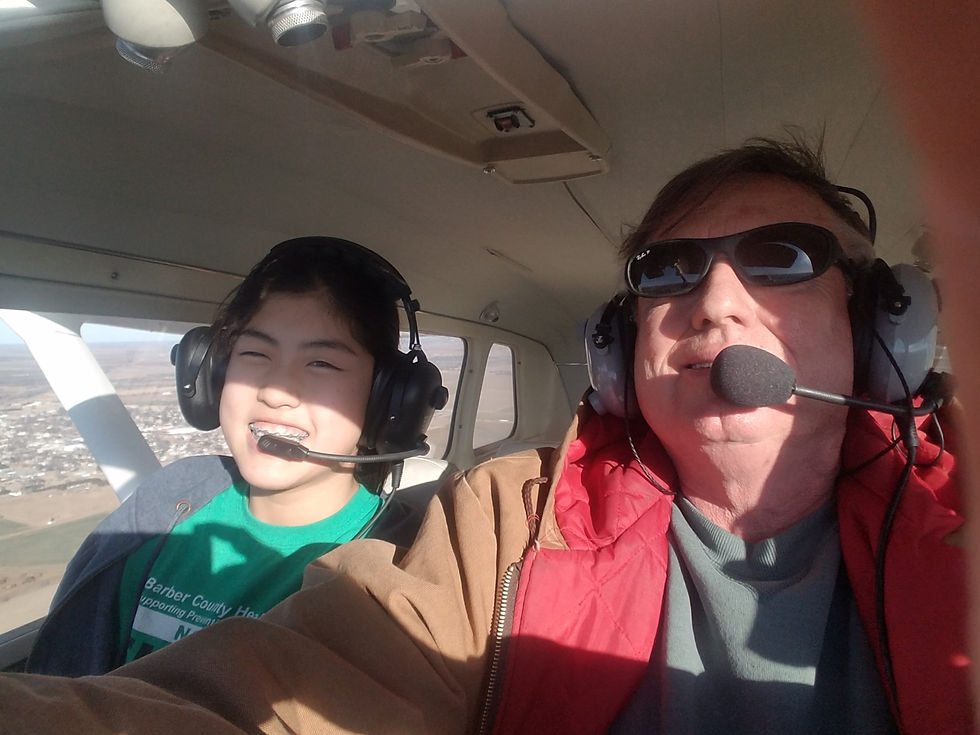


Walz Airport Hanger with N337TS ADAMS 500
Thanks for checking out this blog, the Skymasters have always brought me home. After logging ten of thousands of hours in all the Skymasters, from the 336s, 337, Turbo & Pressurized 337s, O-2s, Summit Sentry O2-337, upgraded P337s with IRS equipment and TSIO-550s power plants, FTB337G Milirole, and even a Rhodesian Lynx O-2 Skymaster FTB-337. Making many ocean crossings, coving six continents from high mountains to Death Valley, flying over sand deserts and miles of jungles.
Thank You,
Brig General Steve Walz

See 4KS Walz Airport, home of the Cessna Skymaster
Thank You, Steve Walz

NOTE: Allsopp Helikites and Drones are deployed for projects at the site as required. Always verify any NOTAMs
Below Gavin and Steve Walz in the very shaky..... B17!

SEE ALL BLOGS Here, & Just Skip the first few pages, and go to the Blog List


I did a lot of Air Show with Steve in the 1990s